Substrate response
Identify painted metal, powder coat, plastics or glass. Texture and surface energy can change the transfer pattern or fragmentation behavior.
Application solution / Security & Tamper Evidence
Define the evidence you need first. Then select a security construction around the substrate, access geometry and inspection conditions.
What should an inspector see after an attempt to open or remove?
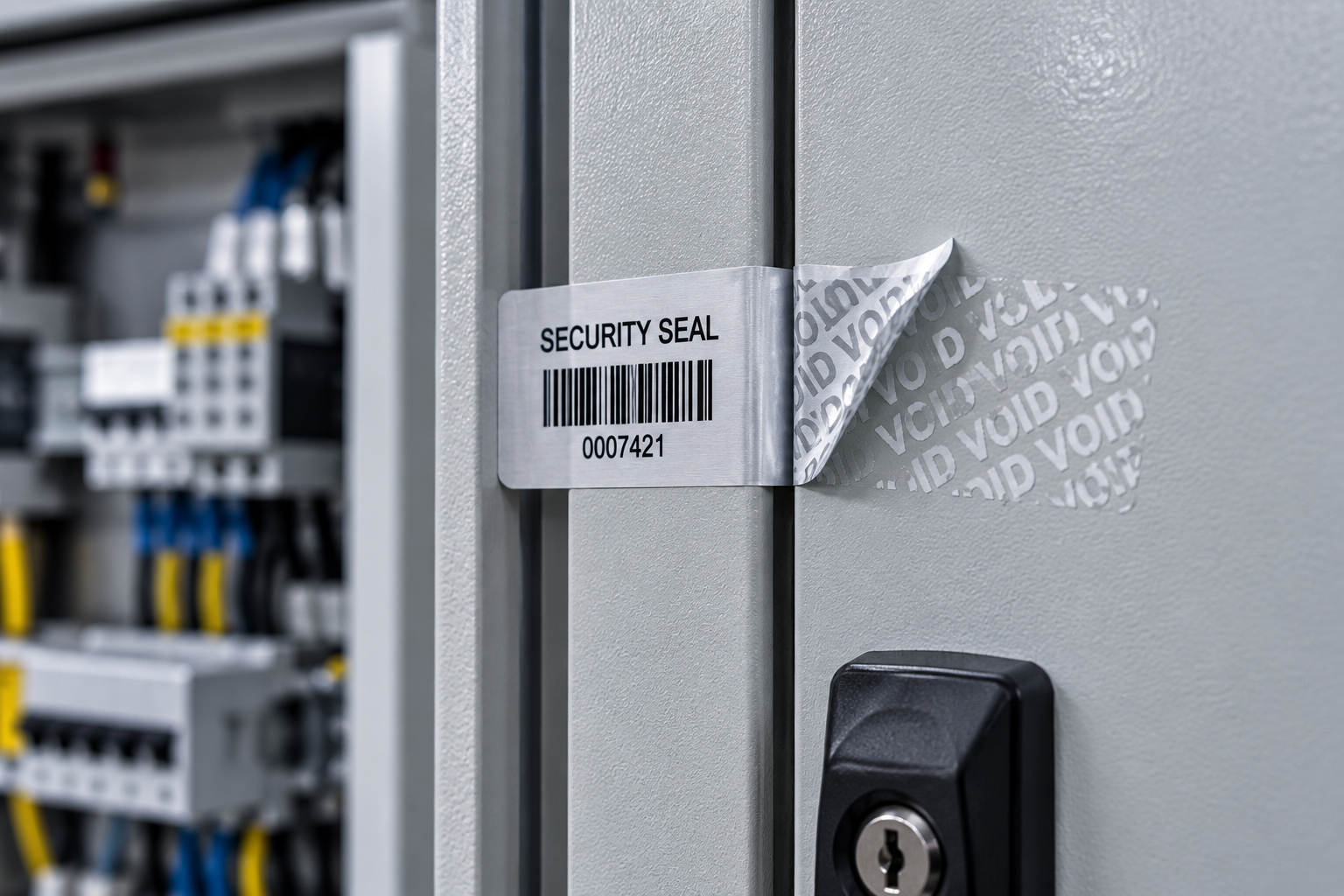
02 / The application challenge
A security seal is useful only when its response is visible and understood. Transfer patterns, fragmentation and removal behavior vary with the surface and conditions; the intended evidence needs to be demonstrated on the actual enclosure.
Identify painted metal, powder coat, plastics or glass. Texture and surface energy can change the transfer pattern or fragmentation behavior.
Define the time between application and inspection. Evaluate removal at the relevant temperatures after the specified adhesive dwell.
Position the seal across the intended opening path with usable contact area on both sides. Avoid bridging unsupported gaps.
Define acceptable evidence and authorized replacement procedures. Tamper evidence helps reveal interference; it does not physically prevent access.
03 / Recommended approach
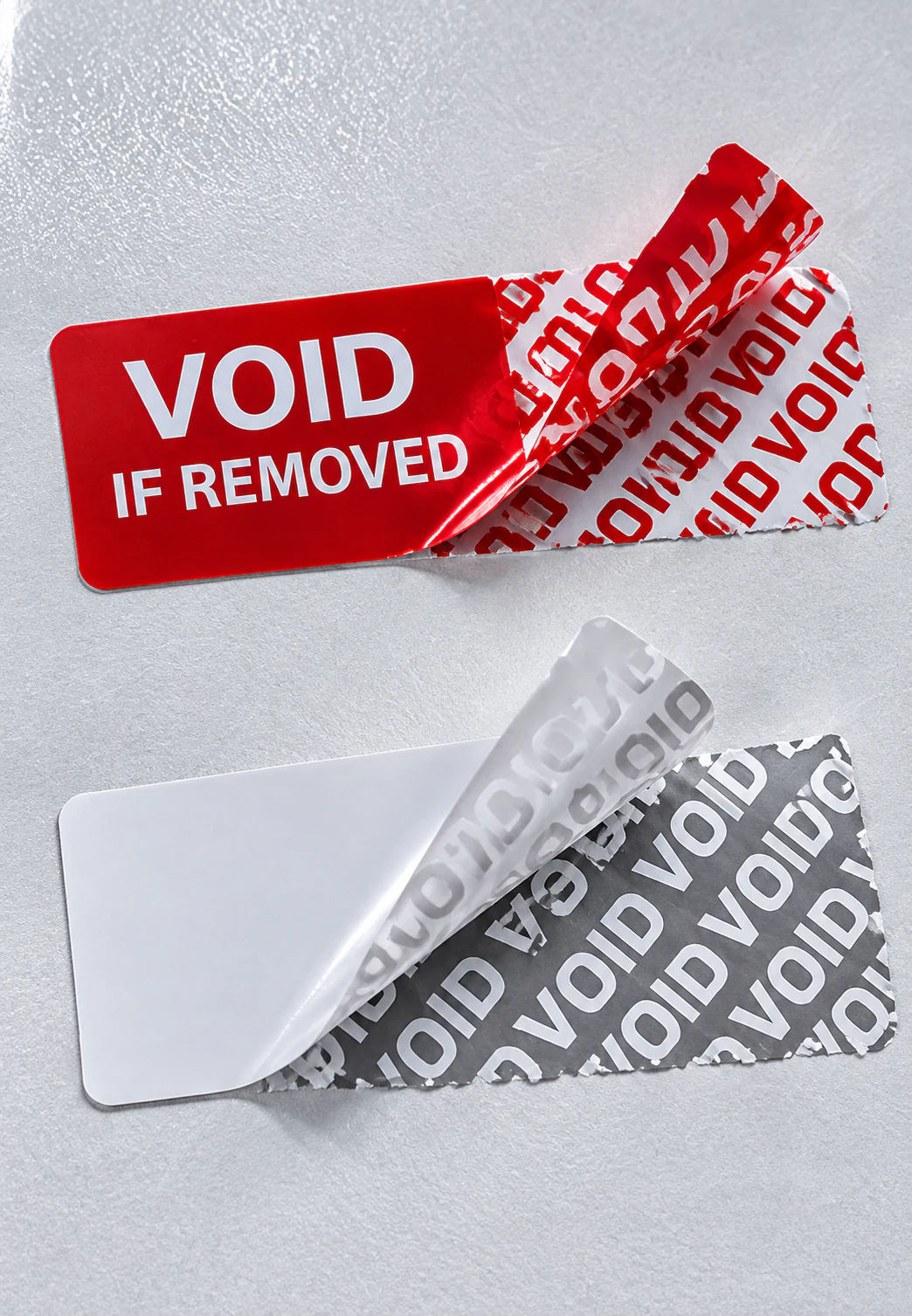
Compare the visible evidence left by different security-label constructions.
Serial numbers, sequential numbering and barcode / QR data support seal assignment and inspection records. Establish the data format and duplicate-control rules before artwork approval. A printed identifier supports a security workflow but does not by itself authenticate an asset.
04 / Construction & technical options
VOID transfer and partial-transfer VOID options chosen around the desired visible pattern and residue on the substrate.
Security films that show the selected removal response while limiting transfer to the surface, subject to substrate evaluation.
Frangible constructions for warranty and security seals where break-up on attempted removal is the intended evidence.
05 / Selection & validation
Evaluate application and attempted removal on representative surfaces after the intended dwell time. Record transfer, fragmentation, visibility and residue under relevant temperature conditions, then agree what inspectors should treat as evidence of interference.
06 / Discuss your application
Tell us what needs identifying and where the label will be used. A short description or drawing is enough to begin.