Inverters and enclosures
Keep model, serial, rating and service information visible on a suitable panel, accounting for glare and access.
01 / Industry application
Outdoor identification for renewable-energy equipment, enclosures and field connections, selected around UV, weather and service access.
02 / Where labels work
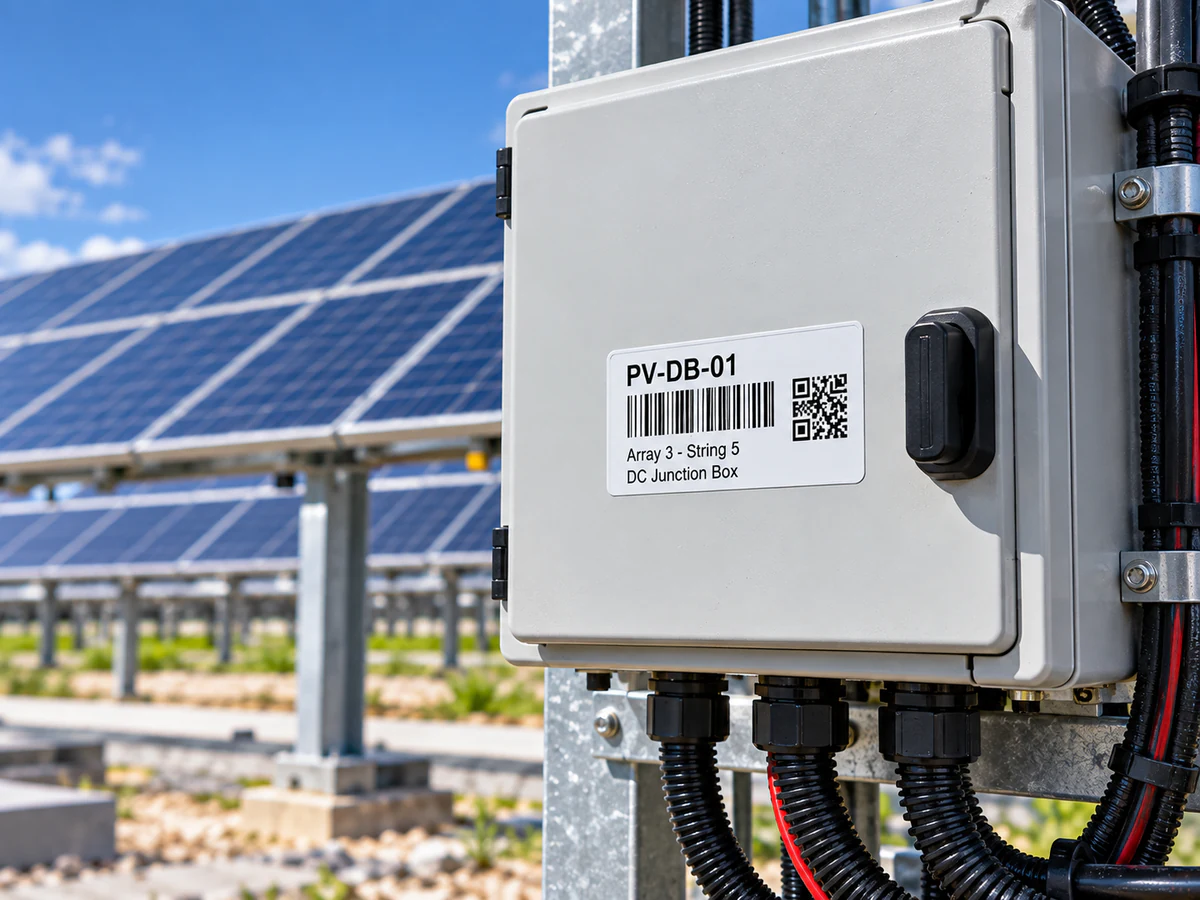
Field identification must remain useful through weather exposure and later maintenance. Site climate, orientation and the equipment surface influence construction choice as much as the requested service period.
Keep model, serial, rating and service information visible on a suitable panel, accounting for glare and access.
Identify cables and branches where technicians can distinguish connections after installation; evaluate exposed jackets separately from enclosure labels.
Use asset identifiers and service references that remain associated with the equipment as records and components change.
03 / Process and service
Assess UV, rain, condensation, temperature cycling, site cleaners and airborne contamination. A sheltered panel and a directly sun-facing enclosure should not automatically use the same durability tier.
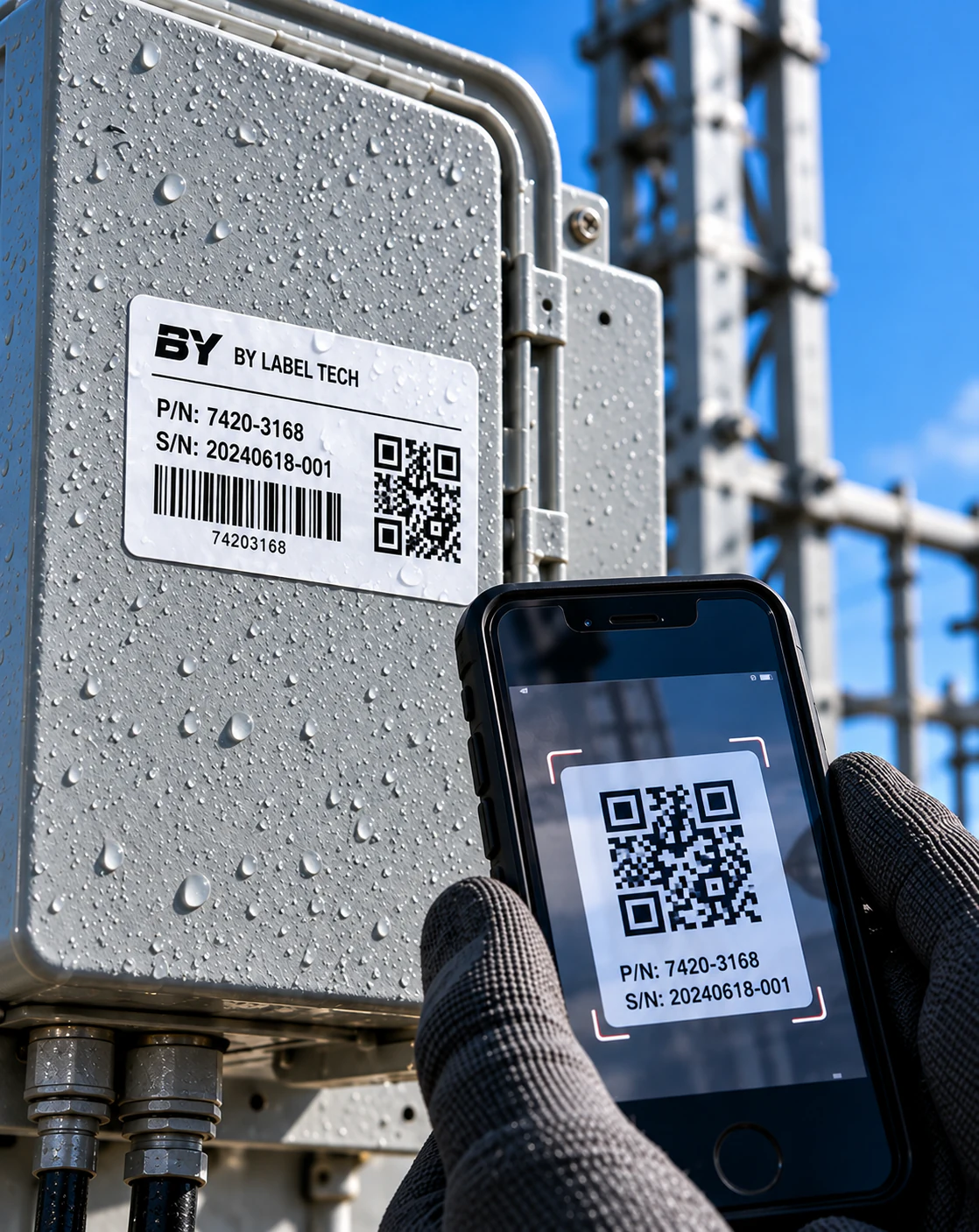
Field-service identification needs accessible code placement on installed equipment.
05 / Material, adhesive and identification
Equipment serials, asset numbers, QR references and human-readable warnings support installation and maintenance. Define who maintains linked records and retain essential information directly on the label.
For electrical equipment marking, project-specific UL-related, cUL or CSA construction documentation may be needed. Approval marks and rating artwork must match the equipment’s authorized documentation; weather resistance alone establishes no electrical approval.
Agree exposure conditions and acceptance criteria for both attachment and readability. Evaluate production-finish substrates and representative outdoor conditions; keep construction documentation tied to the intended service tier.
06 / Start a conversation
Share what you already know. We can work through the remaining details together.