Custom Industrial Labels

Custom Industrial Labels Built Around Your Application

Finished printed labels for industrial requirements beyond a standard format. BY Label Tech evaluates the surface, identification task and application process to coordinate a suitable material, adhesive, print and converting approach.
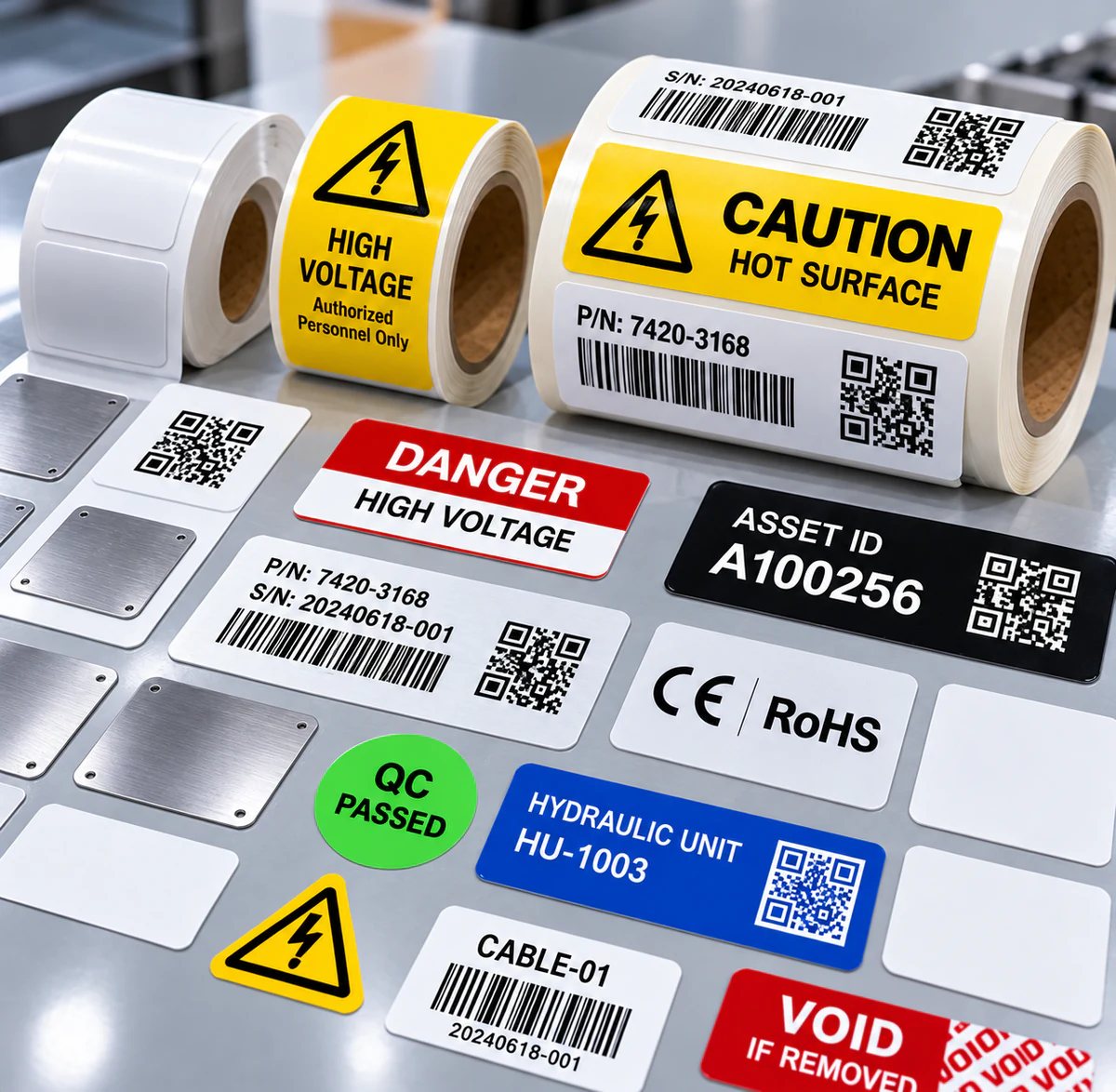
Custom printed industrial label set beside labeled component samples.

02 / Where and how it is used

Custom identification across industrial workflows.

A custom project may combine unusual dimensions, multiple information fields or a demanding surface. Define the functional requirements before selecting the construction.

Component & Assembly Labels

Part identity, revision and serial data fitted to the available area.

Equipment Label Sets

Coordinated information and instruction labels for an equipment project.

Process Identification

Printed references and variable data that support production workflows.

Unusual Surfaces & Formats

Label shapes and constructions evaluated for constrained locations or application methods.
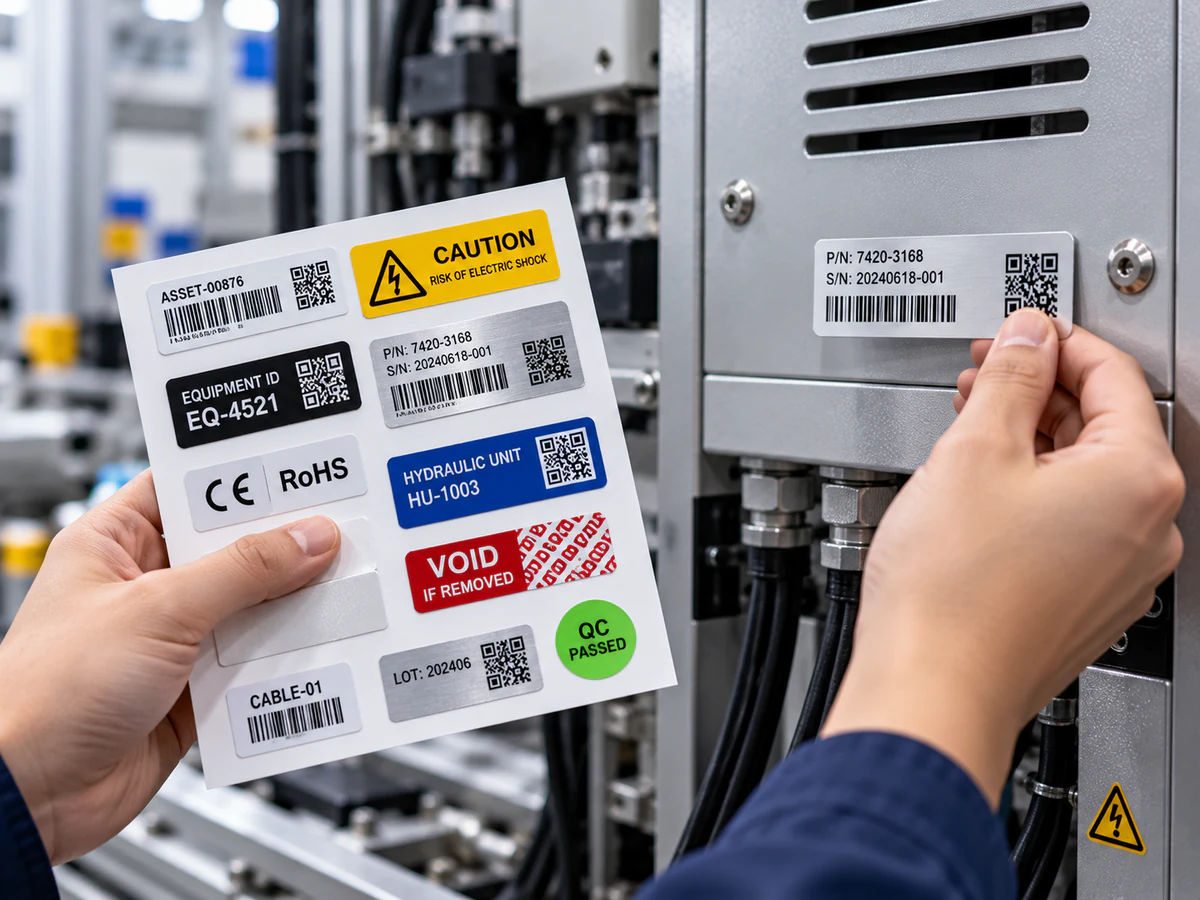
Reviewing a printed label sample against an industrial component surface.

03 / Selecting the right construction
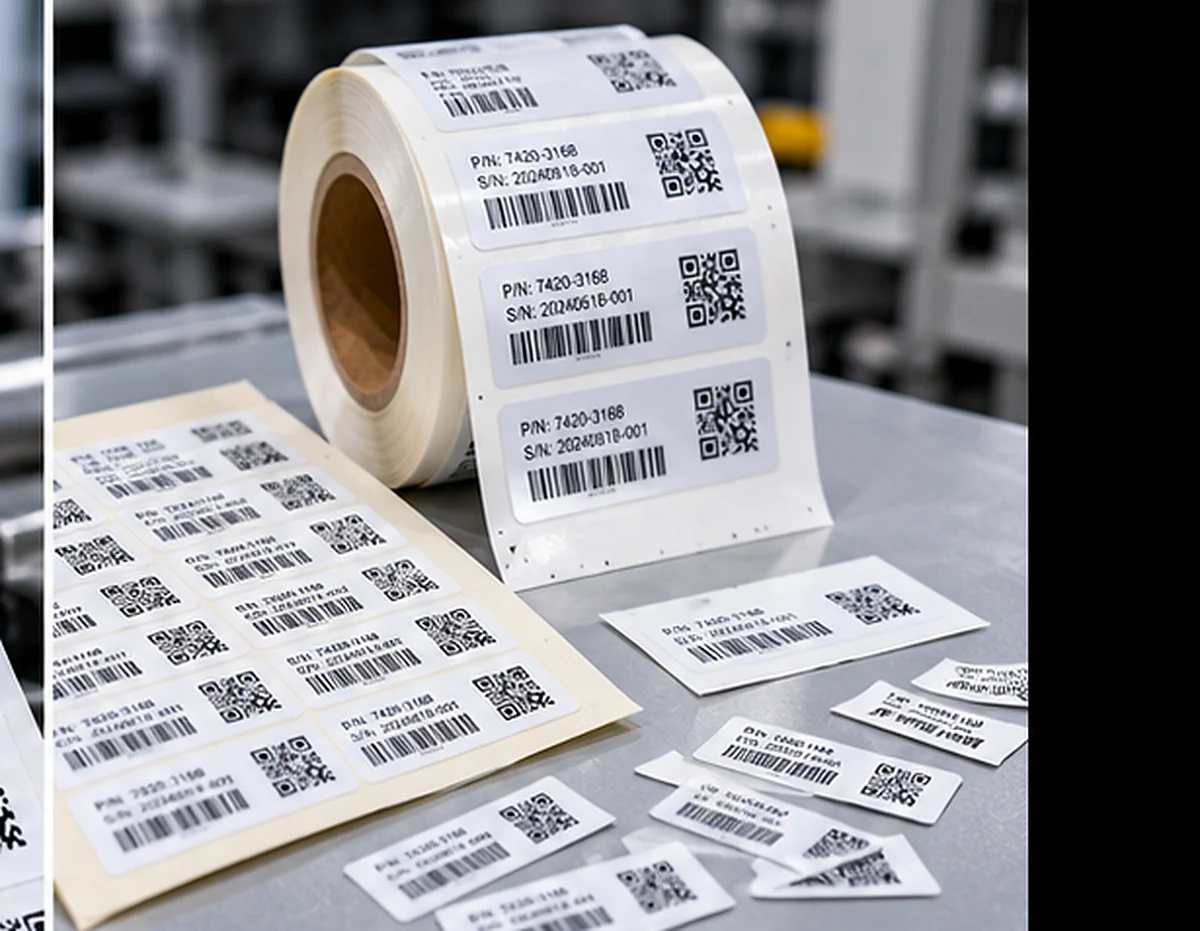
Turn the application brief into a label requirement.

Printed industrial labels supplied in roll, sheet and individual-piece formats.
  1. 01

    Identification Task

    Describe what the label communicates and who or what needs to read it.

  2. 02

    Surface & Space

    Supply substrate details, dimensions, curves and any placement restrictions.

  3. 03

    Exposure

    Include manufacturing conditions, cleaning, handling and the service environment.

  4. 04

    Artwork & Data

    Define fixed content, variable fields, serial rules and data-file requirements.

  5. 05

    Application Method

    Describe manual or automated placement and the format needed at the workstation.

  6. 06

    Project Scope

    Identify quantities, variants, sample requirements and acceptance criteria.

04 / Materials, print and format

Technical Options

Combine material, adhesive, print and converting choices into finished industrial labels for projects that cross standard product categories.

Material
  • PET / PI / PC, vinyl, nylon and specialty films
  • Metallized polyester, synthetic, destructible and tamper-evident options
Adhesive
  • Permanent acrylic, removable, high-tack and high-temperature
  • Low-residue / clean-removal, low-surface-energy and application-specific systems
Print
  • Digital, thermal-transfer compatible options and screen-print related solutions
  • Custom colors, logos, warnings, barcode / QR / Data Matrix and serialization
  • Sequential numbering, coordinated label variants and application-specific information fields
Finishing
  • Lamination, protective overlaminate, specialty die cutting and custom shapes
  • Rolls, sheets or individual pieces; matte / gloss options where applicable
Performance
  • Temperature, chemicals, abrasion, UV and moisture
  • Tamper evidence and flame-retardant constructions selected for the project
Compliance options
  • UL-recognized / UL 969 related, cUL and CSA options
  • RoHS, REACH, halogen-free and UL94 V-0 / VTM-0 flame-retardant options depending on construction

05 / Application and validation

Define how the label will be applied and accepted.

Review the label at the application point as well as in artwork form. Agree which surface, exposure and readability conditions the proposed construction needs to address.

  • Application requirements and artwork review
  • Construction and format evaluation
  • Sample or application review where required
  • Agreed identification and delivery requirements

06 / Discuss your application

Bring us the application, not just a label size.

Share the surface, artwork, data and conditions of use. We can evaluate the construction and supply format for your finished industrial labels.

A short description, approximate size and quantity are enough to start.

Helpful application details, when available
  • Application / end use
  • Substrate and label dimensions
  • Quantity and variants
  • Material / adhesive requirements
  • Minimum / maximum or peak temperature
  • Exposure duration / chemical / UV / moisture
  • Required service life or tamper behavior
  • Artwork / color / print requirements
  • Barcode / QR / Data Matrix / variable data
  • Compliance / halogen / flame requirements
  • Lamination / shape / supply format