Chemical Resistant Labels

Chemical Resistant Labels Selected Around the Exposure

Custom printed labels for industrial identification where oils, cleaners, solvents or process chemicals are part of the application. Material, adhesive and print protection are evaluated against the actual exposure conditions.
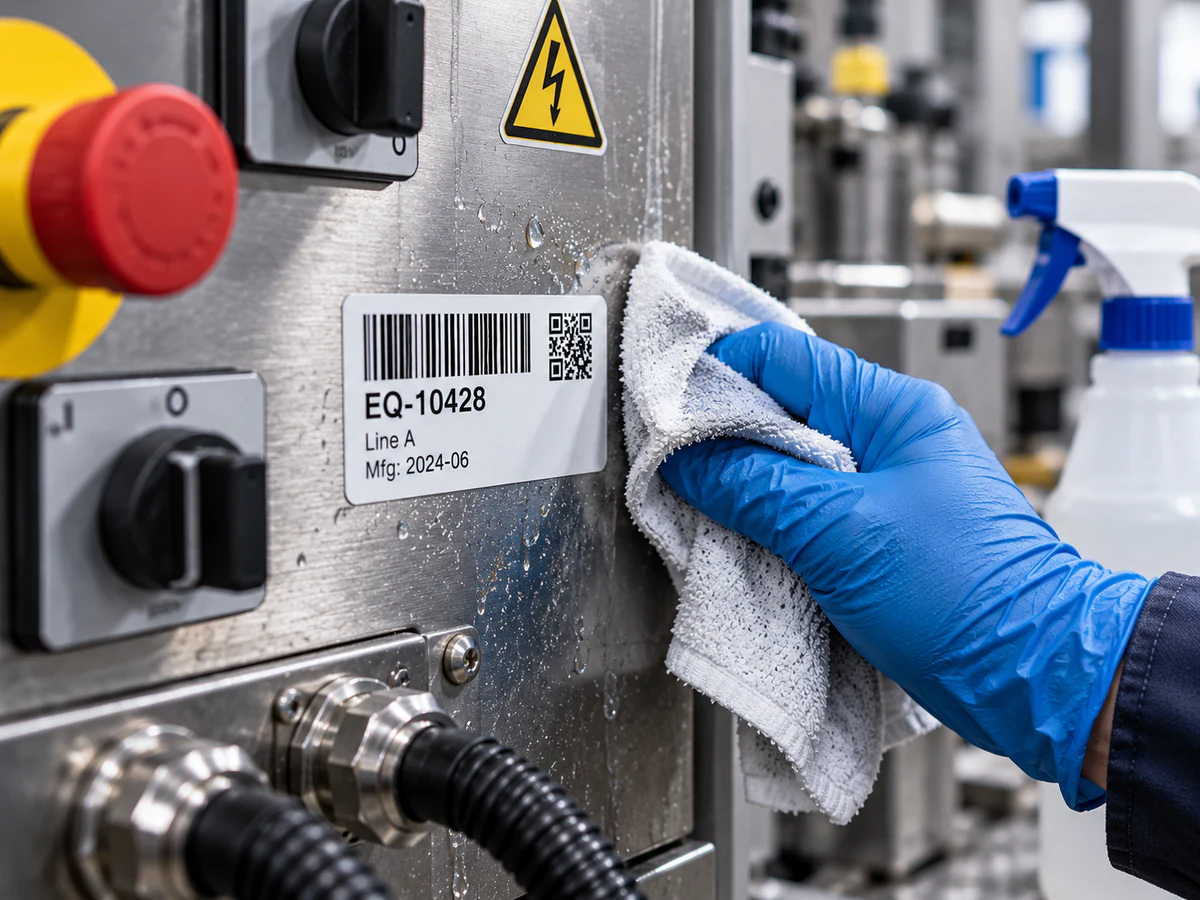
Printed identification label on an equipment panel beside a maintenance cloth.

02 / Where and how it is used

Identification where exposure is part of the job.

Occasional splashes, repeated wiping and sustained contact place different demands on a label. Selection considers the complete construction and how the exposure occurs.

Machinery & Components

Machinery and automotive-component identification where oils, grease or process fluids may contact the label.

Process Equipment

Equipment references and maintenance identification around industrial processes.

Cleaned Assemblies

Serial and code identification in laboratories and industrial environments using alcohol / IPA or cleaning agents.

Industrial Containers

Customer-specified identification on chemical containers, matched to contents, contact and handling conditions.
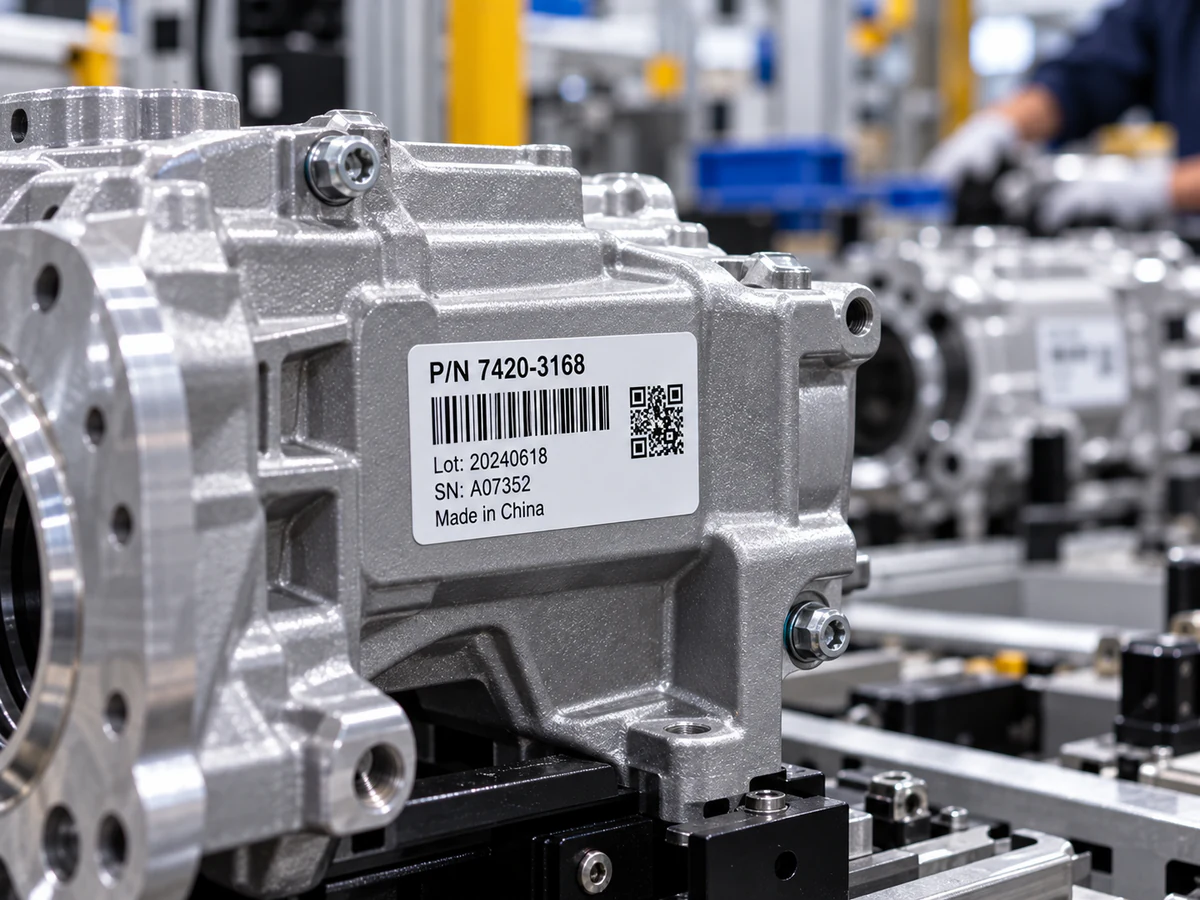
Lot identification label on an automotive component housing.

03 / Selecting the right construction
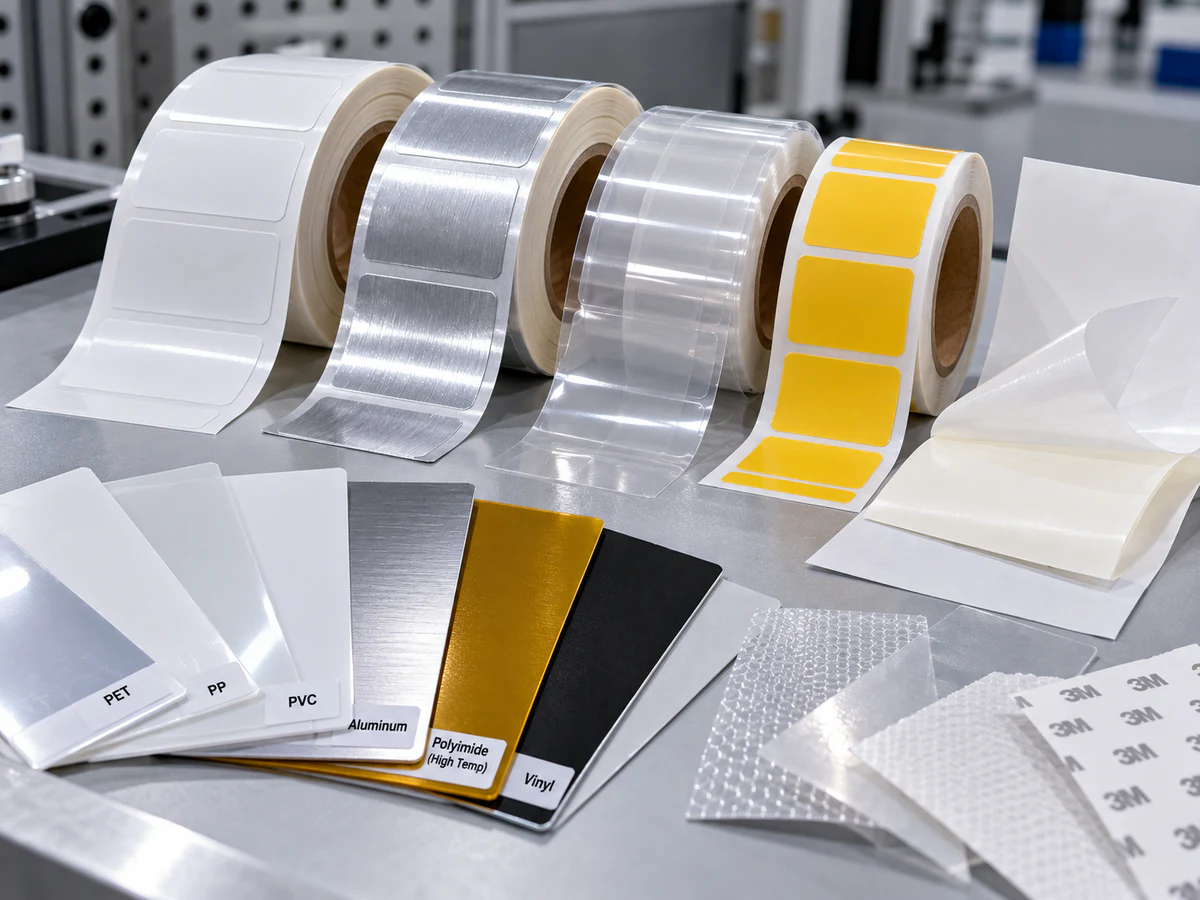
Specify the exposure before choosing the construction.

Thin printed label, release liner and protective film samples beside a coated-metal coupon.
  1. 01

    Substance

    Identify the actual fluids, mixtures and concentrations used.

  2. 02

    Contact Method

    Distinguish splashing, wiping, spraying and sustained contact.

  3. 03

    Duration & Frequency

    Describe each exposure and how often it repeats.

  4. 04

    Surface & Bond

    Supply substrate, coating and application-surface condition.

  5. 05

    Combined Conditions

    Include temperature, abrasion, pressure and cleaning in the same workflow.

  6. 06

    Acceptance Criteria

    Define the attachment, appearance and identification requirements after exposure.

04 / Materials, print and format

Technical Options

Resistance options are matched to chemical type, concentration, contact duration and temperature, together with the print system, overlaminate and substrate.

Exposure options
  • Oils, grease, alcohol / IPA, cleaning agents and specified industrial chemicals
  • Moisture and abrasion resistance options; no single construction covers every chemical
Materials
  • Polyester / PET and specialty synthetic films
  • Protective laminate constructions matched to the chemical contact
Adhesive
  • Permanent acrylic, high-tack and application-specific systems
  • Substrate compatibility and exposure at label edges considered together
Print & protection
  • Chemical-compatible print systems and protective overlaminates
  • Matte / gloss finishes and custom color printing where applicable
Identification
  • Barcode, QR code, Data Matrix, serial numbers, variable data and warning information
  • Customer-approved graphics and operating references, arranged for the available reading area
Application evaluation
  • Sample / application testing for demanding chemical exposure, using the actual substrate and contact sequence
Supply format
  • Custom shapes, specialty die cutting, rolls, sheets or individual pieces

05 / Application and validation

A cleaning cycle is more than a single fluid.

Review the full sequence, from application to routine use. Different fluids, wiping actions and process stages may need to be considered together.

  • Surface preparation before labeling
  • Process-fluid contact during use
  • Repeated wiping or cleaning
  • Post-exposure readability and attachment

06 / Discuss your application

Tell us what will contact the label.

Share the substances, contact conditions, surface and required identification. We can evaluate a finished printed construction around the application.

A short description, approximate size and quantity are enough to start.

Helpful application details, when available
  • Application / container / component
  • Substrate and surface coating
  • Chemical / oil / cleaner identity
  • Concentration and contact duration
  • Contact temperature and frequency
  • Print / overlaminate requirements
  • Label size, format and quantity
  • Barcode / QR / Data Matrix / variable data
  • Artwork and required service life
  • Sample and acceptance criteria
  • Compliance requirements where applicable