Tamper Evident Labels

Tamper Evident Labels for Visible Evidence of Interference

Finished printed seals for electronics, equipment access points and industrial assets. The construction is selected around the surface and the evidence required when a label is opened, lifted or removed.
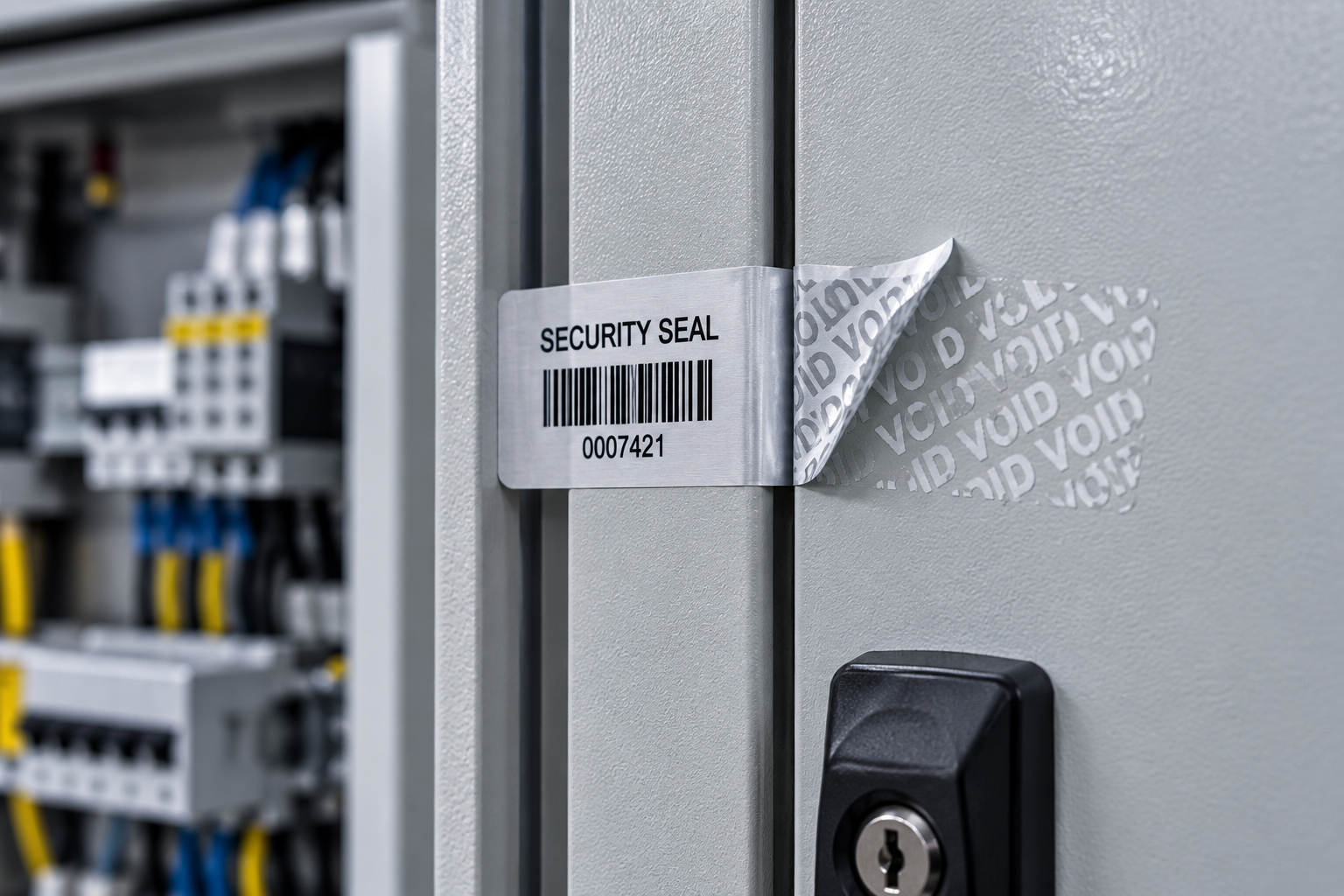
Partially lifted security seal leaving a visible VOID pattern across an equipment enclosure seam

02 / Where and how it is used

Connect the seal to the access point.

Tamper indication supports inspection and warranty-control workflows. It does not physically prevent access or establish the same removal behavior on every surface.

Electronics Housings

Seals across selected opening points on devices and assemblies.

Industrial Enclosures

Visible indication at equipment covers or service panels.

Warranty Inspection

Printed identifiers that support review of a seal and its associated record.

Asset Security

Serialized identification where evidence of label removal is part of the inspection requirement.
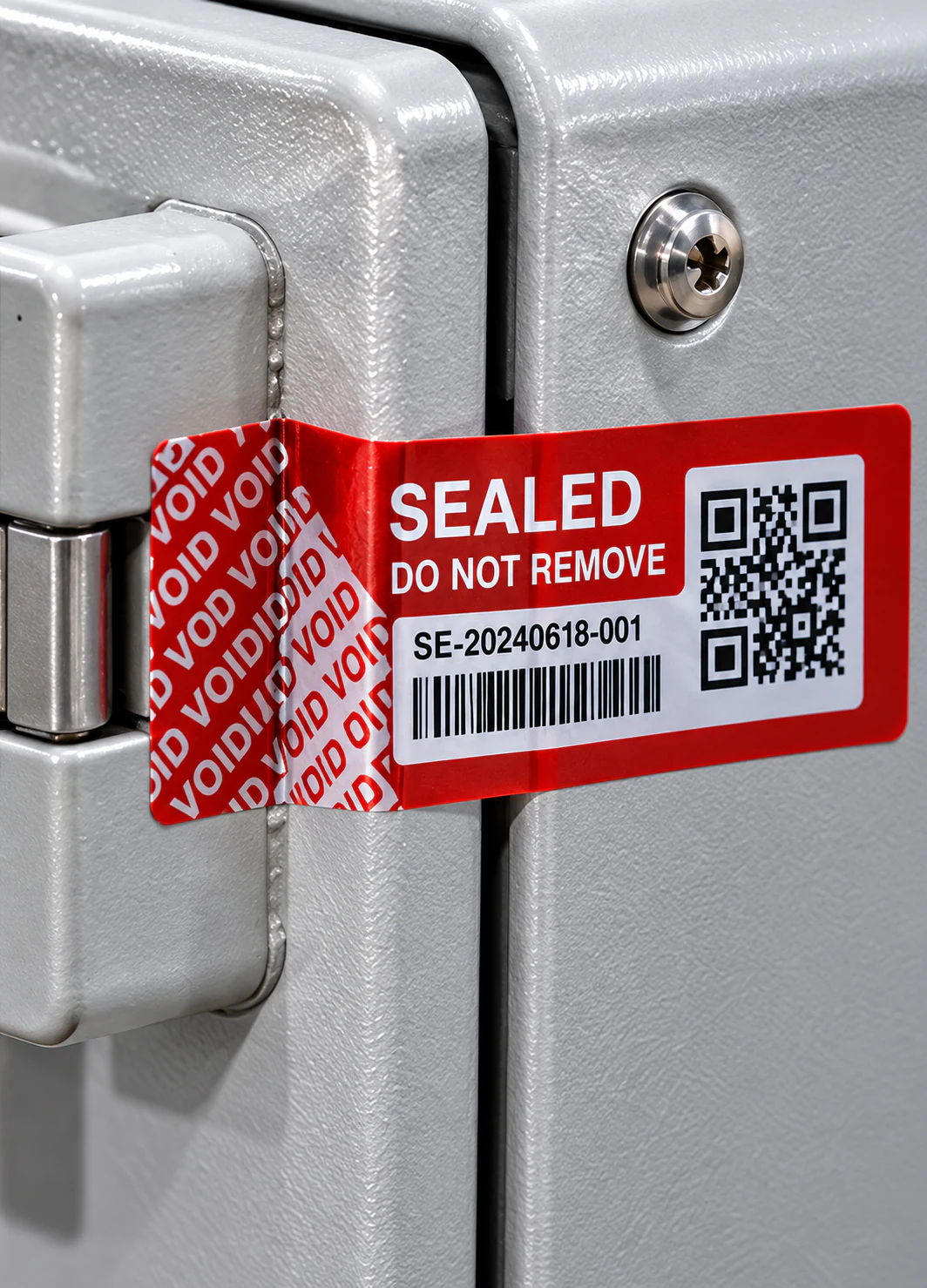
Intact adhesive security seal spanning an equipment cover seam.

03 / Selecting the right construction
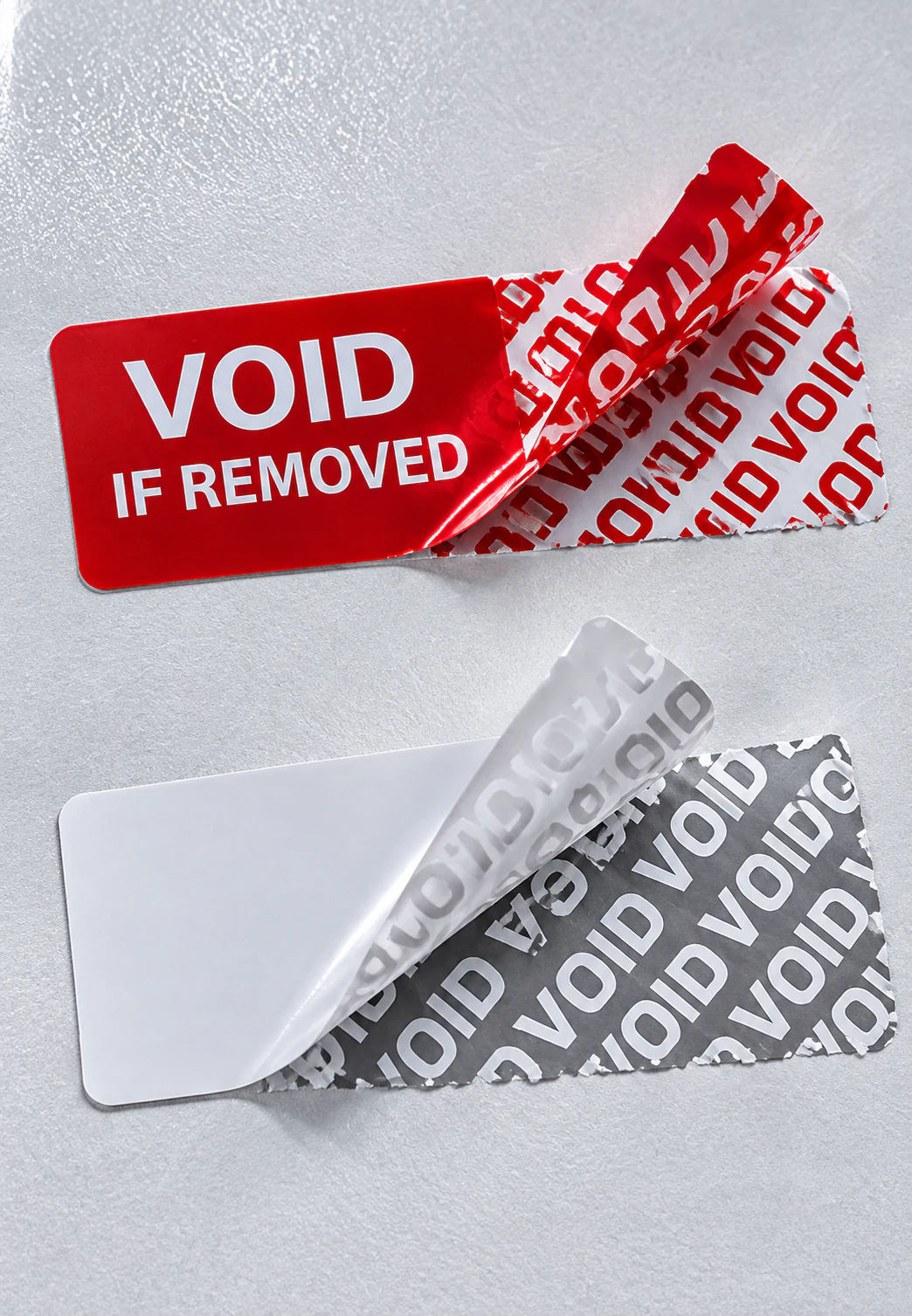
Seal behavior depends on the construction and the surface.

Adhesive seal samples showing transferred removal evidence and destructible-film fragments.
  1. 01

    Evidence Required

    Specify whether the intended indication is in the label, on the surface or both.

  2. 02

    Surface Finish

    Identify material, texture, coating and any restrictions on residue.

  3. 03

    Opening Geometry

    Supply seam, cover and access-point dimensions for placement review.

  4. 04

    Application Conditions

    Describe surface preparation, adhesive dwell time and temperature before handling or inspection.

  5. 05

    Service Exposure

    Include temperature, cleaning, abrasion and normal equipment handling.

  6. 06

    Inspection Method

    Define how staff recognize the intended change and match serial data to records.

04 / Materials, print and format

Technical Options

Security behavior is selected around the substrate, adhesive, dwell time and temperature. Choose the required evidence before specifying the seal.

Security constructions
  • VOID transfer, partial-transfer VOID and non-transfer constructions
  • Destructible films and fragmenting labels
Seal applications
  • Warranty seals, security seals and serialized security labels
  • Electronics, equipment access points, enclosures and asset security
Material & adhesive
  • Tamper-evident and destructible films with construction-specific adhesive systems
  • Transfer / residue behavior matched to the actual surface
Security identity
  • Custom security patterns where available
  • Barcode, QR code, Data Matrix, serialization and variable data
  • Customer-approved graphics and inspection instructions; identifiers connect the seal to its inspection record
Selection variables
  • Substrate finish, adhesive, dwell time, temperature and chosen security construction
  • Evidence on the label, the surface or both, according to the selected option
Supply format
  • Custom seal shapes, color printing, rolls, sheets or individual pieces

05 / Application and validation

Review normal handling alongside removal behavior.

The project needs a clear distinction between intended tamper evidence and damage caused by normal handling. Review the seal location, service conditions and inspection expectations together.

  • Cleaning and surface preparation
  • Placement across the intended access point
  • Routine service and handling
  • Visible evidence and record comparison

06 / Discuss your application

Start with the surface and the evidence required.

Share the opening point, equipment finish, inspection requirement and artwork. We can evaluate a printed seal construction for the project.

A short description, approximate size and quantity are enough to start.

Helpful application details, when available
  • Equipment / warranty / asset application
  • Substrate and surface finish
  • Seal dimensions and quantity
  • Transfer / non-transfer / destructible behavior
  • Residue restrictions
  • Adhesive dwell time
  • Application and service temperature
  • Cleaning and handling exposure
  • Serial / barcode / QR / Data Matrix data
  • Artwork / security pattern requirements
  • Surface sample for removal evaluation