Chemical contact
List fluid names, concentrations, temperature and whether contact is a wipe, splash or immersion. Include mixed exposure and drying cycles.
Application solution / Harsh Environments
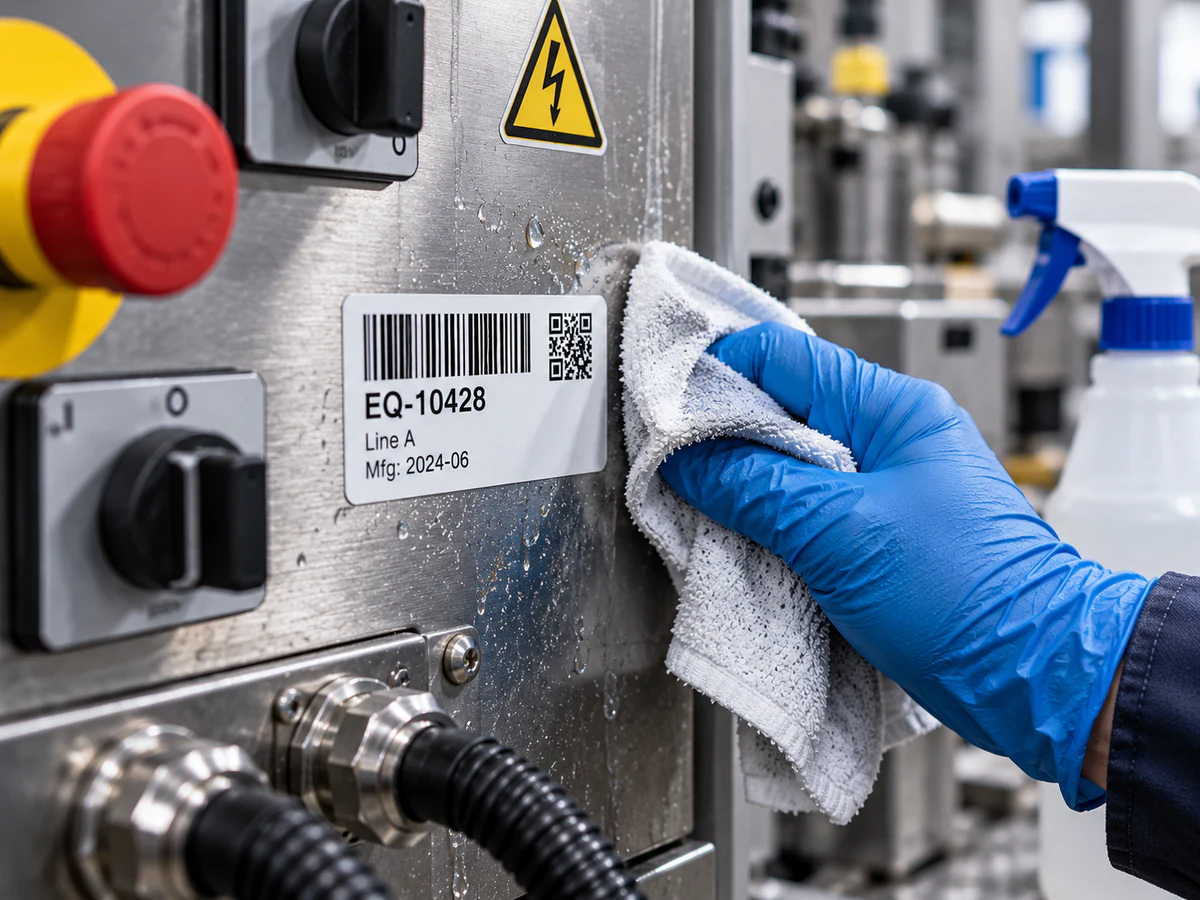
Define the actual exposure sequence before choosing a resistant material. The printed surface, adhesive edges and substrate all contribute to the result.
What reaches the label during work, cleaning and maintenance?
02 / The application challenge
A general chemical-resistance description cannot capture every fluid, concentration or cleaning method. A practical solution starts with the substances used, their contact time and temperature, and the mechanical wear between cleaning cycles.
List fluid names, concentrations, temperature and whether contact is a wipe, splash or immersion. Include mixed exposure and drying cycles.
Review stainless steel, painted or powder-coated metal and plastics. Contamination or texture can limit contact at the adhesive interface.
Specify cloths, brushes and handling frequency. Protection needs to preserve readable information as well as the film surface.
Evaluate cleaning after heat, moisture before abrasion and other real sequences rather than treating each stress in isolation.
03 / Recommended approach
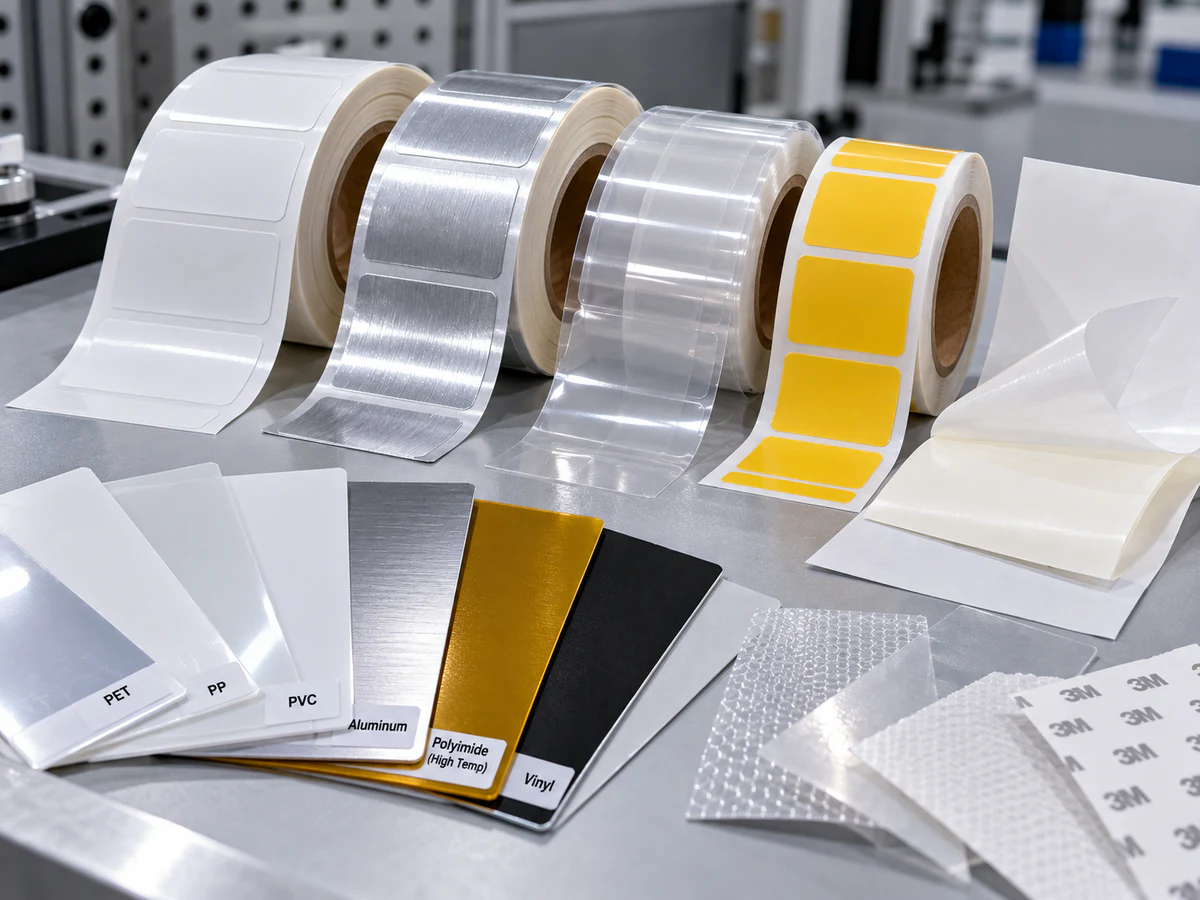
Review film, print and protective layers together with the expected cleaning exposure.
Use barcode, QR code, Data Matrix, serial numbers and variable text for parts and equipment records. Warning information, logos and custom colors can be combined with digital, thermal-transfer-compatible or screen-printed industrial graphics as appropriate to the chosen construction.
04 / Construction & technical options
PET and specialty synthetic films paired with print and overlaminate options for specified chemical and abrasion exposure.
Permanent acrylic, high-tack or low-surface-energy adhesive options selected around finish, texture and cleaning.
PC / polycarbonate or specialty films for warning and equipment information, with digital or screen-printed graphics where appropriate.
05 / Selection & validation
Evaluate the proposed printed label with the actual fluids, contact time, wiping method and substrate. Review adhesion, edge condition, print contrast and scan performance after the agreed exposure sequence.
06 / Discuss your application
Tell us what needs identifying and where the label will be used. A short description or drawing is enough to begin.