Application solution / Extreme Temperature

Keep identification readable through demanding thermal processes.

Start with the process sequence, peak temperature and exposure time. Then match the label to the surface and the information that must survive each stage.

Start with the question

Will the identification survive the complete temperature profile?
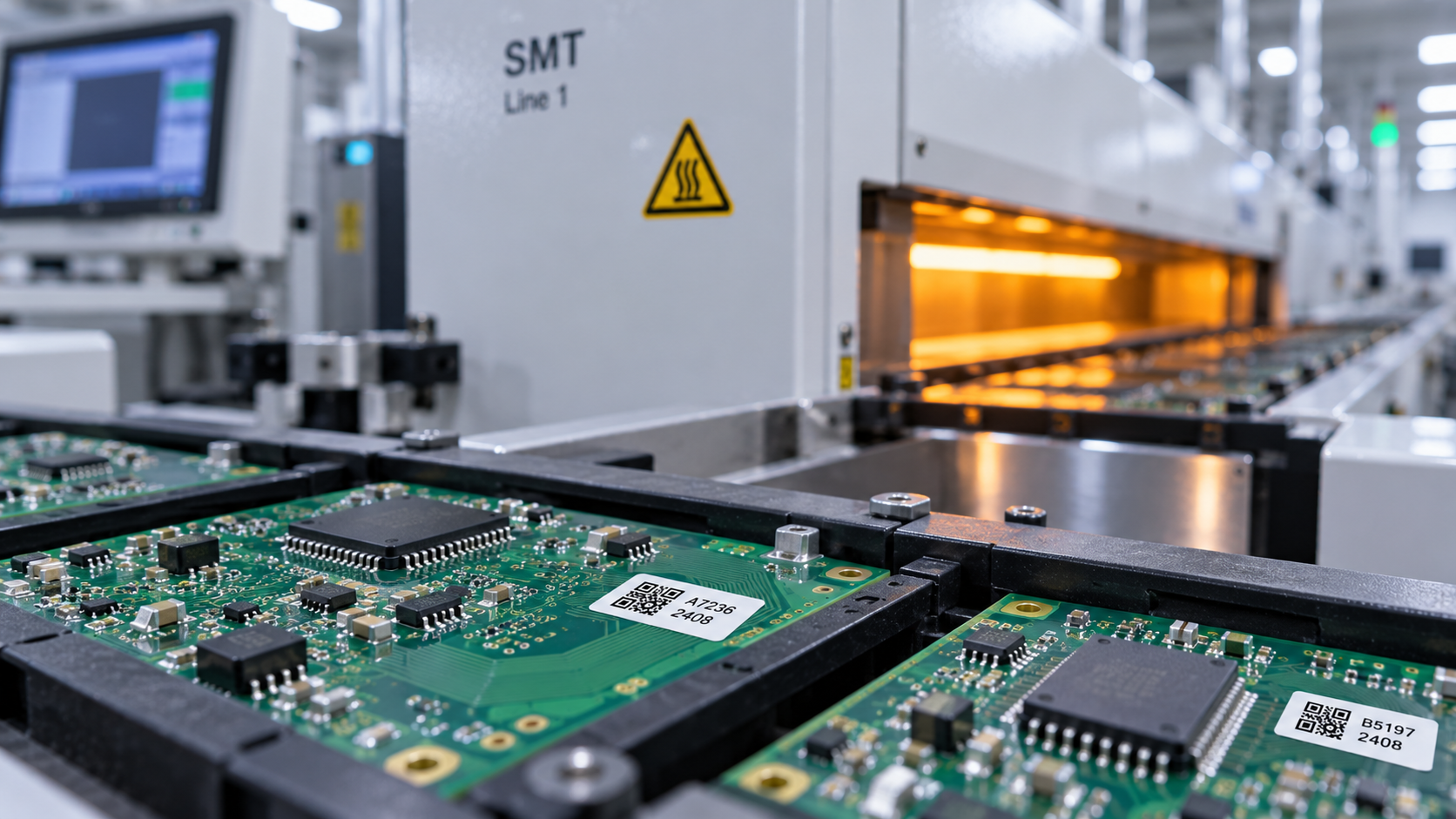
Identification labels on circuit boards beside electronics processing equipment

02 / The application challenge

What must the label withstand?

A label can remain attached while its code becomes unreadable, or retain its print while the adhesive loses its bond. Thermal identification needs acceptance criteria for both, including the cleaning and handling that follow the heat exposure.

Peak is not service temperature

Record the ramp, peak, dwell time and number of cycles. A short process exposure does not establish a continuous-use rating.

Surface and process stage

Identify the PCB surface, metal finish or component substrate. Determine whether the label is fitted before heat, between stages or after processing.

Print and geometry

Check code size, quiet zones, print contrast and dimensional stability after the complete process, including flux and cleaning.

Cold application conditions

Separate storage temperature from label application temperature. Include frost, condensation and the thaw cycle in evaluation.

03 / Recommended approach
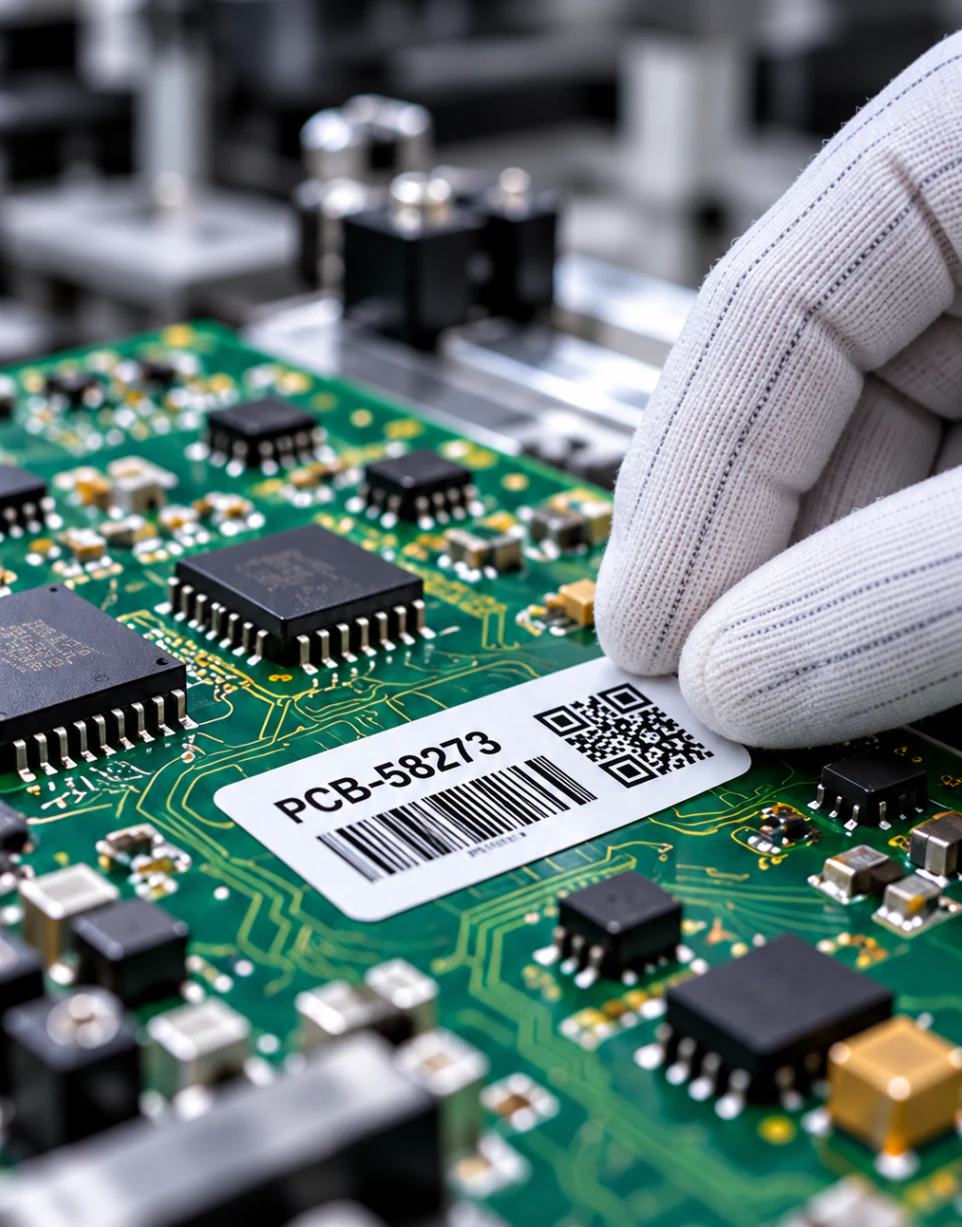
Match the approach to the application.

Labeled circuit board in a carrier at an electronics processing station.

Process identification needs to remain useful through the complete thermal sequence.

  • PCB and SMT assembly through reflow and wave solder
  • Electronics component and assembly traceability
  • Industrial process tracking and heat-treatment environments
  • Specialty cold-storage and cryogenic identification, evaluated separately

Barcode, QR code, Data Matrix and serial or sequential data connect each part to its process record. Define the scan distance and available area before setting code density; use thermal-transfer-compatible or digital print constructions only where they suit the thermal sequence.

04 / Construction & technical options

Select the complete printed construction.

Durable industrial film

PET / polyester with a matched adhesive and print system for industrial temperature classes and subsequent handling.

Electronics process identification

Polyimide / PI and specialty high-temperature constructions with process-compatible adhesive and printing.

Specialty thermal construction

Select specialty high- or low-temperature systems for the actual exposure. Cryogenic and extreme heat applications require separate construction choices.

Available options apply to selected constructions. Confirm the material, adhesive, print system, substrate and exposure together before specifying a finished label.

Industrial service class
  • Selected durable constructions around −40°C to +150°C; confirm service conditions and application temperature separately.
Elevated process classes
  • Specialty polyester options around 180–200°C where applicable.
  • PI / electronics process options around 260–300°C+.
  • Selected specialty process constructions around 320°C; confirm peak duration and cycle count.
Specialty cold class
  • Selected cryogenic / low-temperature constructions down to approximately −196°C for relevant applications. This is separate from the high-temperature classes.
Bond and protection
  • High-temperature or application-specific adhesive systems; protective constructions only where process-compatible.
Exposure options
  • Flux / process chemicals, cleaning and abrasion; assess barcode / Data Matrix readability and dimensional stability.
Finished format
  • Small-format and custom die-cut labels in rolls, sheets or individual pieces.

Compliance and marking requirements

  • UL-recognized / UL 969 related constructions and RoHS / REACH options are available for relevant projects, subject to the selected system and conditions.
  • A thermal process class does not establish a flame classification or certify the finished equipment. Define any additional compliance requirement before selection.

05 / Selection & validation

Evaluate the label in its real conditions.

Evaluate sample labels on the intended substrate through the complete temperature and cleaning sequence. Agree adhesion, edge lift, dimensional stability and code-readability criteria before production. Exposure beyond normal PCB conditions can be evaluated separately.

06 / Discuss your application

Start with your application.

Tell us what needs identifying and where the label will be used. A short description or drawing is enough to begin.

Helpful application details, when available
  • Substrate and application stage
  • Service minimum / maximum and application temperature
  • Peak, dwell time and number of cycles
  • Reflow / wave-solder or cold-storage sequence
  • Flux, cleaning fluids and handling
  • Size, quantity, code data, artwork and supply format
  • Compliance requirements and acceptance criteria