Control cabinets and I/O
Match panel and terminal identifiers to the approved electrical drawings and revision. Keep related identifiers in a consistent sequence.
01 / Industry application
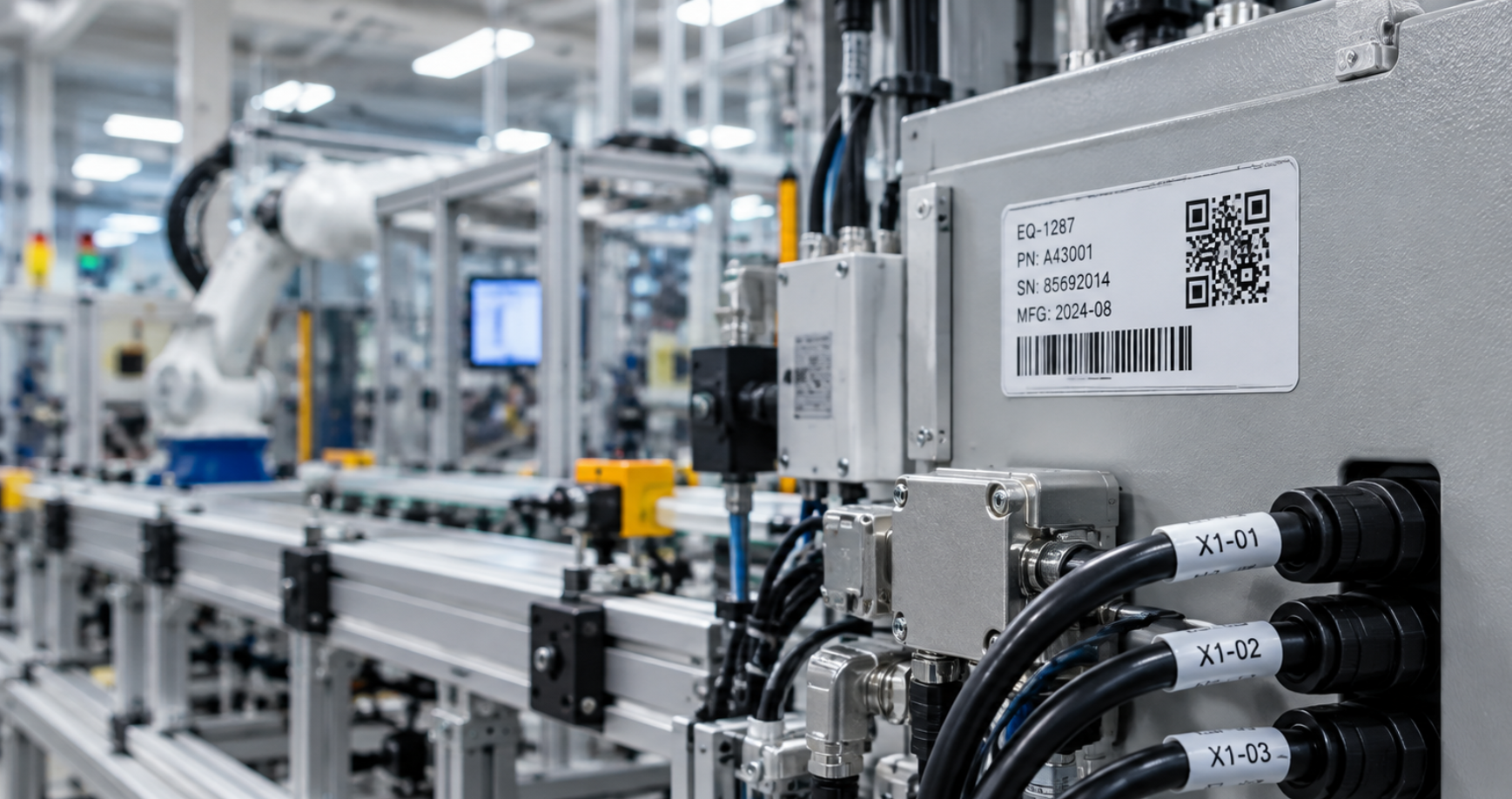
Labels for automation cells, controls, sensors and cable connections, supporting commissioning, changeovers and service identification.
02 / Where labels work
A control cabinet, sensor and moving cable need different identifiers, yet their naming must agree with the machine documentation. Labels should help a technician find the correct connection during commissioning and later replacement.
Match panel and terminal identifiers to the approved electrical drawings and revision. Keep related identifiers in a consistent sequence.
Provide readable device references within the available body or mounting area, clear of sensing faces and access points.
Label cable ends and assemblies so replacement parts retain the right association after a changeover.
03 / Process and service
Consider cabinet heat, handling during commissioning, cable flex, wipe-down cleaners and oils near production machinery. Washdown or outdoor cells need a separate exposure assessment.
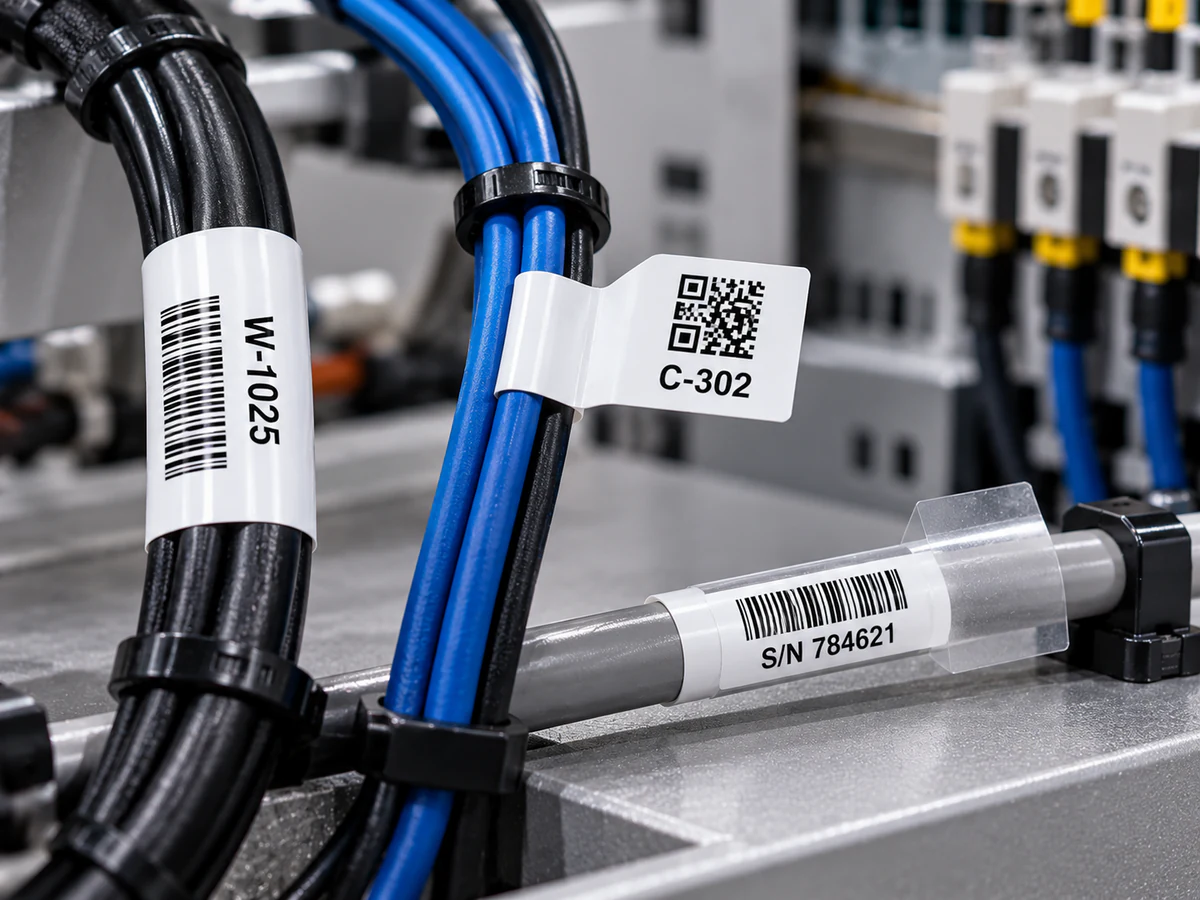
Cable identification connects device references with the installed assembly.
05 / Material, adhesive and identification
Use device and connection references for commissioning, then serial or asset data for maintenance. Agree revision control and replacement-label data to prevent inconsistent naming after equipment modifications.
Electrical-panel marking may require documented UL-related, cUL or CSA constructions. Flame-retardant and halogen-free options are project-specific; the requirements for a cabinet label and a cable identifier may differ.
Fit samples to a representative cell, verify technician access and code reading, exercise moving cables and repeat the normal cleaning procedure. Include a drawing-to-label data check.
06 / Start a conversation
Share what you already know. We can work through the remaining details together.