Harness and connector assemblies
Maintain circuit and assembly identity through routing, packing and installation. Match marker geometry to cable diameter and branch clearance.
01 / Industry application
Application-led labels for automotive parts, harnesses and assemblies, considering heat, oils, handling and part-level traceability.
02 / Where labels work
A part can encounter very different conditions during production and vehicle service. Define the installation location and labeling stage rather than treating all automotive component labels as one construction.
Maintain circuit and assembly identity through routing, packing and installation. Match marker geometry to cable diameter and branch clearance.
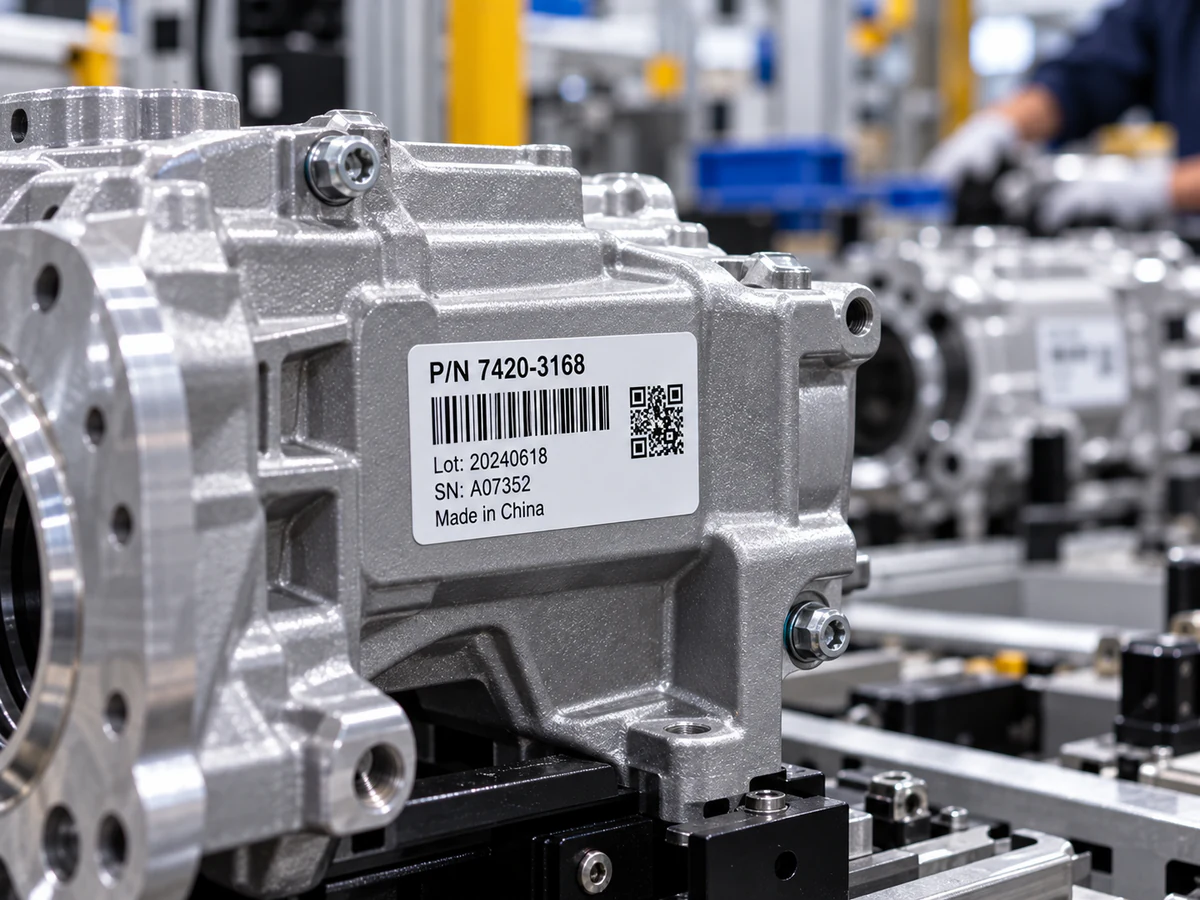
Locate part and serial identifiers on suitable metal or plastic surfaces, accounting for casting texture, coatings and handling.
Link lot, inspection and finished-part identity while distinguishing temporary manufacturing status from permanent service information.
03 / Process and service
Evaluate local heat, oils, grease, cleaning agents, moisture and handling abrasion. Vibration can create rubbing at contact points. Under-hood, cabin and sheltered component locations need separate requirements.
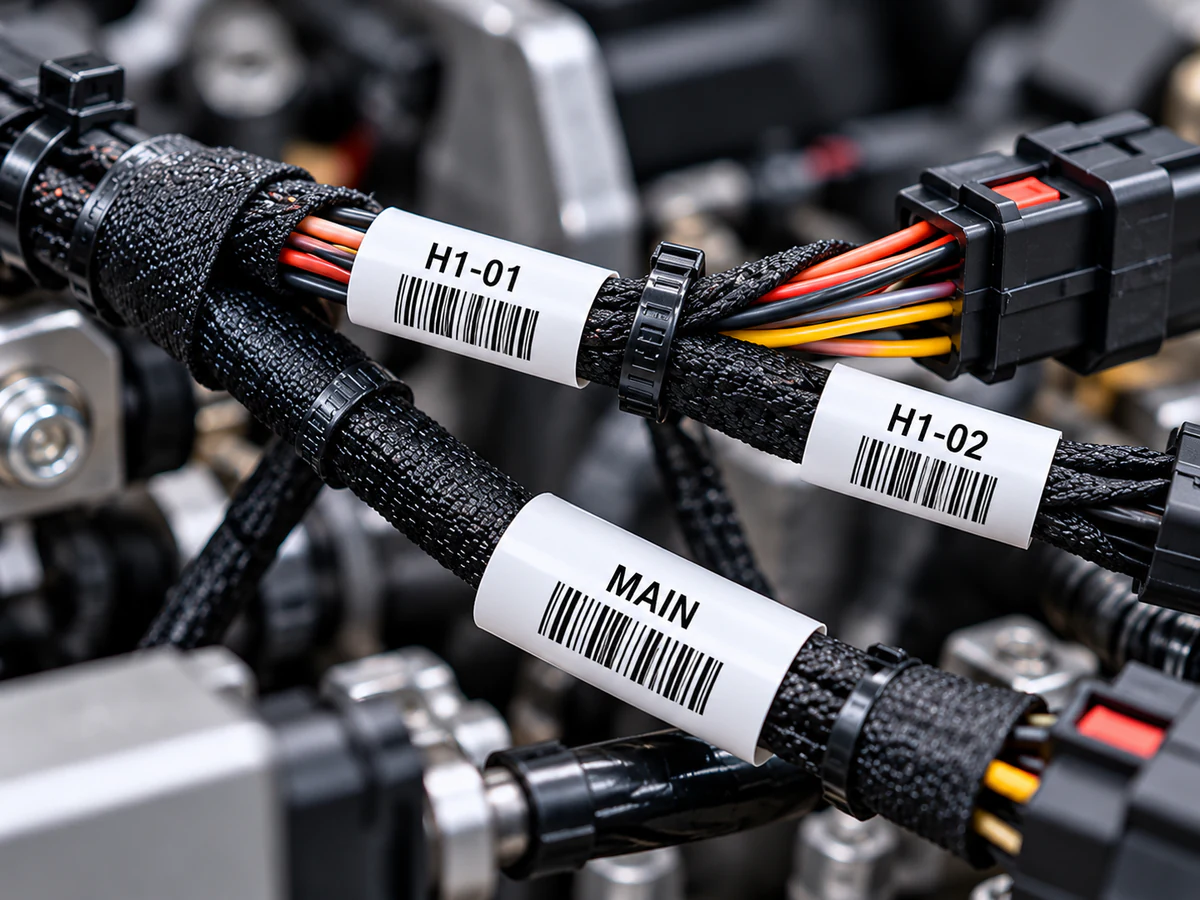
Branch and assembly identifiers support harness traceability.
05 / Material, adhesive and identification
Part numbers, batch information, serial numbers and compact Data Matrix or barcode data can support assembly genealogy and service identification. Agree data ownership and duplicate prevention with the production system.
Use the customer’s component specification and approval process as the starting point. RoHS, REACH, halogen-free or flame requirements may call for construction documentation. No automotive OEM approval is implied.
Test on representative production parts after the actual surface preparation. Include thermal cycling, fluid contact, packing abrasion and installed-position scans in the agreed evaluation.
06 / Start a conversation
Share what you already know. We can work through the remaining details together.