Enclosure rating panels
Maintain model, serial and approved rating information on an accessible surface with room for required text and marks.
01 / Industry application
Label constructions for electrical enclosures, rating panels, wiring and access seals, with application-specific marking and documentation requirements.
02 / Where labels work
Electrical equipment combines permanent rating information, wiring identification and service warnings. Each has a different location and approval context, so the label schedule should distinguish the purpose of every marking.
Maintain model, serial and approved rating information on an accessible surface with room for required text and marks.
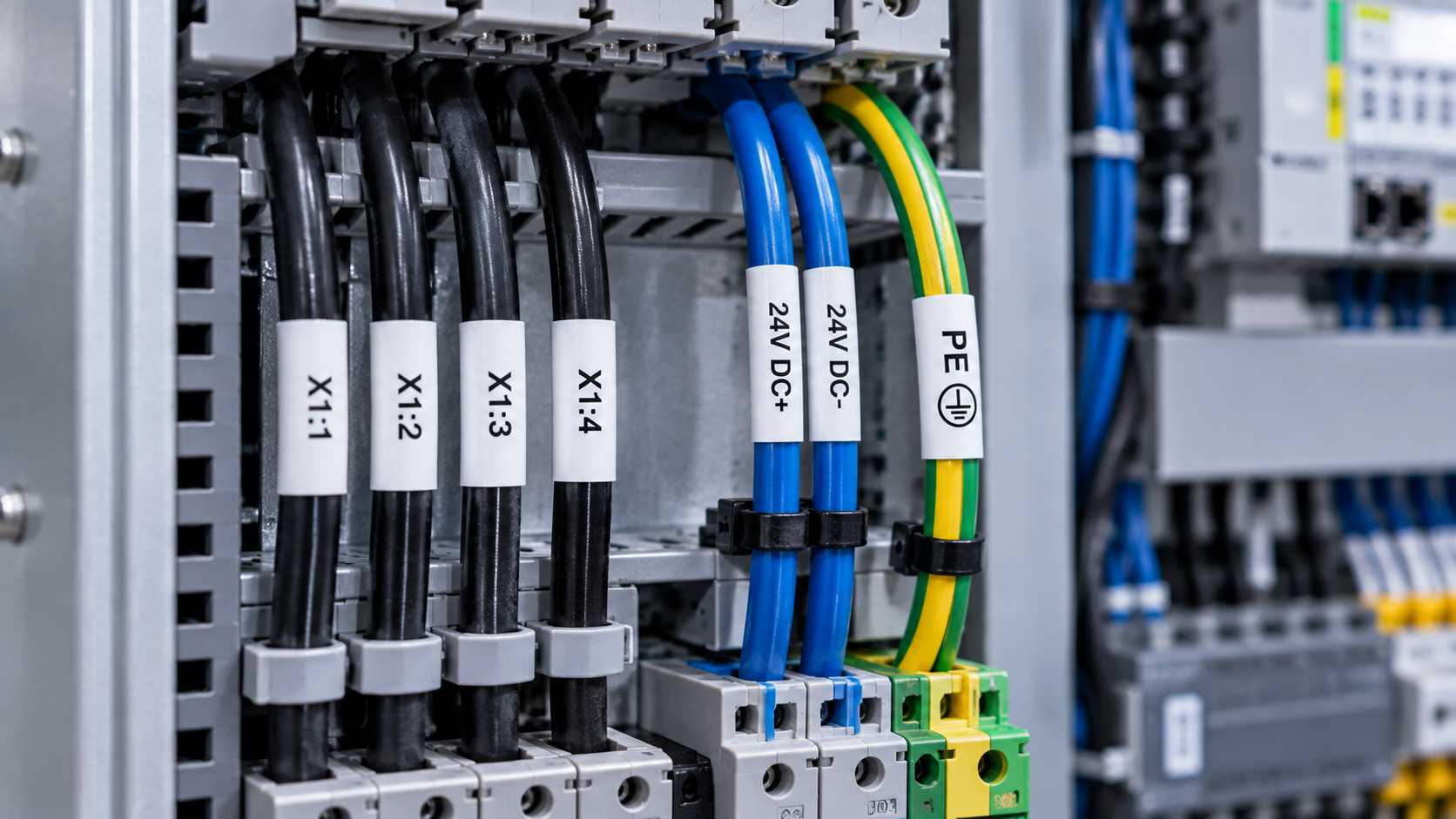
Coordinate cable and terminal identifiers with the equipment diagram; allow visibility after termination.
Place warning information at the relevant access point. Where specified, an enclosure seal can indicate opening but cannot prevent access by itself.
03 / Process and service
Assess internal heat separately from outdoor enclosure exposure. Powder-coated steel, molded plastic and cable jackets require different adhesion evaluations; cleaning and condensation may affect each location.
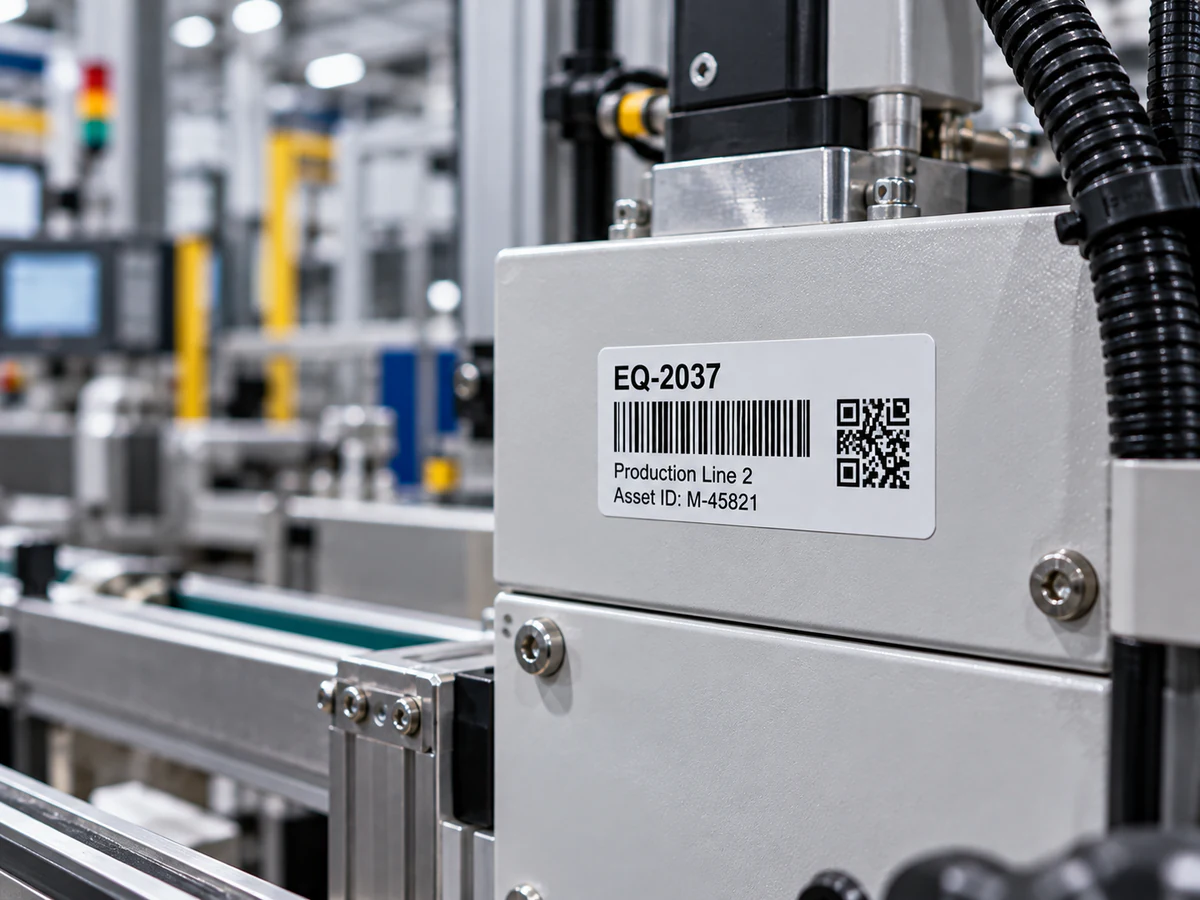
Equipment identifiers need a visible position on the enclosure surface.
05 / Material, adhesive and identification
Combine human-readable model and rating information with serial, barcode or Data Matrix identification. Keep warning content and approval artwork under the equipment manufacturer’s revision control.
Review UL 969-related PGDQ2 / PGDQ8, cUL or CSA options against the specified end use and print combination. PGIS2 limited-use cord-label applications have a different scope. UL94 V-0 / VTM-0 and halogen-free requirements need applicable construction evidence. Equipment marking symbols do not establish label or equipment certification.
Check samples on enclosure finishes and cable jackets, then assess heat, moisture and cleaning in the specified sequence. Review required documentation and artwork before production approval.
06 / Start a conversation
Share what you already know. We can work through the remaining details together.