High Temperature Labels

High Temperature Labels for Industrial Identification & Traceability

Identification solutions for applications involving elevated-temperature processes, manufacturing environments and durable traceability requirements. Label construction can be evaluated around the process, surface and required identification method.
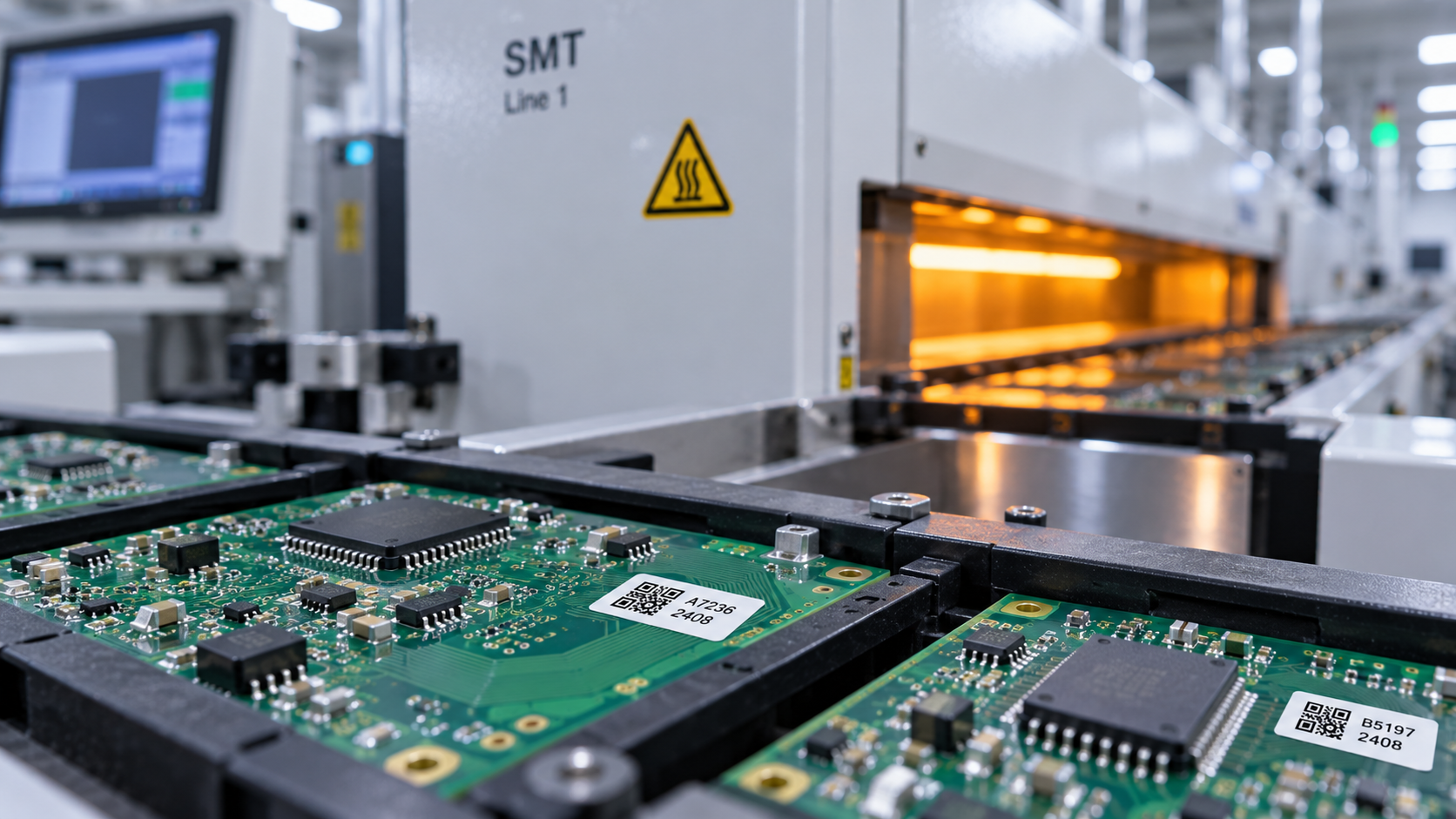
Identification labels on circuit boards beside electronics processing equipment

02 / Where and how it is used

Where high-temperature labels are used.

High-temperature labels support identification in heat-exposed applications. Selection goes beyond the facestock: the complete construction needs to suit the process and the information that must remain readable.

These are common starting points; the appropriate construction depends on the specific application.

PCB & SMT Manufacturing

PCB and SMT identification through reflow and wave-solder process stages.

Electronics & Components

Traceability for components, assemblies and production workflows.

Industrial Manufacturing

Part and assembly identification for heat-treatment processes and industrial traceability.

Process Tracking

Barcode, QR code, Data Matrix and serial identification used through production.
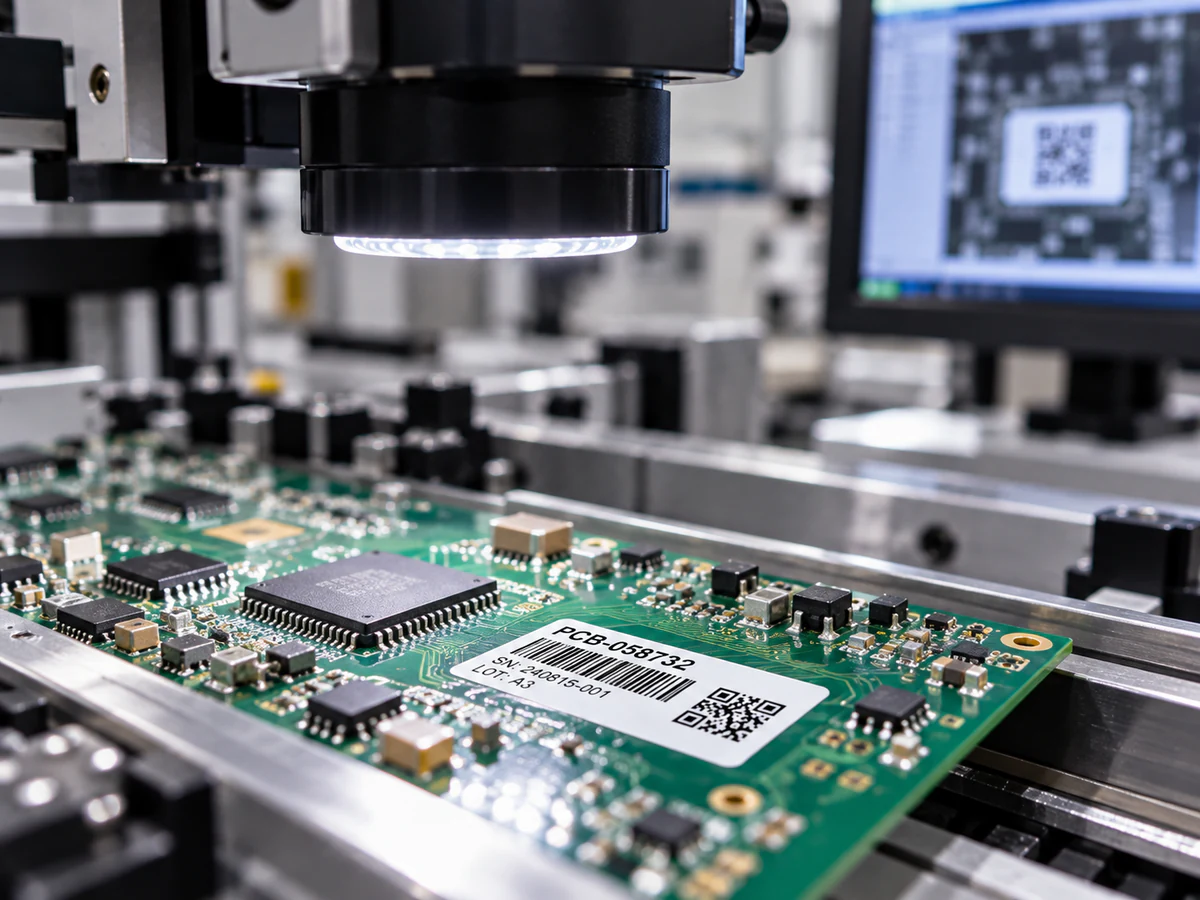
Traceability label in a clear area of a circuit board at an inspection station.

03 / Selecting the right construction
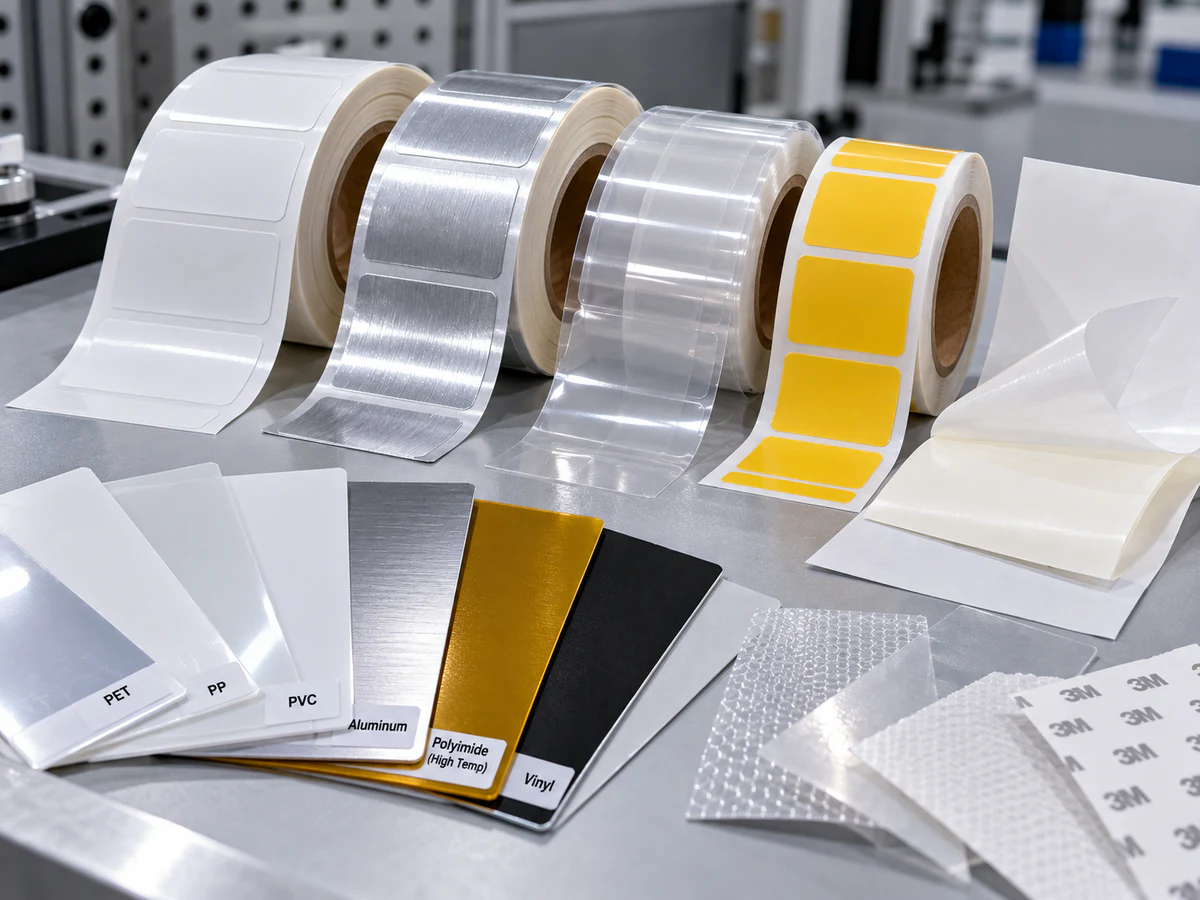
Temperature is only one part of the specification.

Thin printed label, release liner and protective film samples beside a coated-metal coupon.
  1. 01

    Temperature & Duration

    Consider both the temperature level and how long the label is exposed.

  2. 02

    Surface

    Metal, coated surfaces, PCB-related surfaces, plastics or other substrates may require different constructions.

  3. 03

    Process Stage

    Determine whether the label is applied before, during or after the demanding process.

  4. 04

    Adhesive

    Adhesive selection should consider the surface, process and service conditions.

  5. 05

    Identification Method

    Text, graphics, barcode, QR code, serial number or variable data.

  6. 06

    Service Requirement

    Determine what must remain attached and readable during and after the process.

04 / Materials, print and format

Technical Options

Temperature classes describe different constructions, not one universal label. Match peak temperature and exposure duration to the complete label and process.

Temperature classes
  • Industrial high-temperature options: up to approximately 150°C
  • Higher-temperature polyester / specialty options: approximately 180–200°C where applicable
  • Polyimide PCB / process options: 260–300°C+
  • Selected specialty constructions: approximately 320°C process exposure
Materials & adhesive
  • PET / polyester, polyimide / PI and specialty high-temperature constructions
  • High-temperature and application-specific adhesive systems
Process applications
  • PCB, SMT, reflow, wave solder and electronics manufacturing
  • Heat-treatment processes and industrial traceability
Resistance options
  • Flux / process chemicals, cleaning exposure and abrasion
  • Print systems selected for barcode and Data Matrix readability through the specified process
Identification
  • Barcode, QR code, Data Matrix, serial numbers, sequential numbering and variable data
  • Customer text and graphics alongside the required codes and variable data
Supply format
  • Custom die-cut shapes and small-format labels; rolls, sheets or individual pieces
  • Protective construction evaluated against process compatibility

05 / Application and validation

Designed around the process, not a generic temperature number.

Two applications with similar peak temperatures may need different label constructions. A suitable solution starts with the complete process, rather than one temperature number.

  • Exposure duration & surface
  • Pressure / contact
  • Chemicals or cleaning
  • Manufacturing sequence
  • Post-process service conditions

06 / Discuss your application

Start with the process your label needs to survive.

Share the surface, process conditions, identification requirements and quantity. We can evaluate a suitable construction for the application.

A short description, approximate size and quantity are enough to start.

Helpful application details, when available
  • PCB / process / industrial application
  • Substrate and application surface
  • Peak temperature and exposure duration
  • Minimum / maximum service temperature
  • Reflow / wave-solder / process sequence
  • Flux / cleaning / chemical exposure
  • Label size, format and quantity
  • Barcode / QR / Data Matrix requirements
  • Serial / variable data and artwork
  • Required service life
  • Compliance requirements and sample criteria