Cable & Wire Identification Labels

Cable & Wire Identification Labels for Connected Assemblies

Finished printed identification labels for wire harnesses, cable assemblies and industrial wiring. Format, adhesive and printed information are evaluated around the cable, assembly process and service environment.
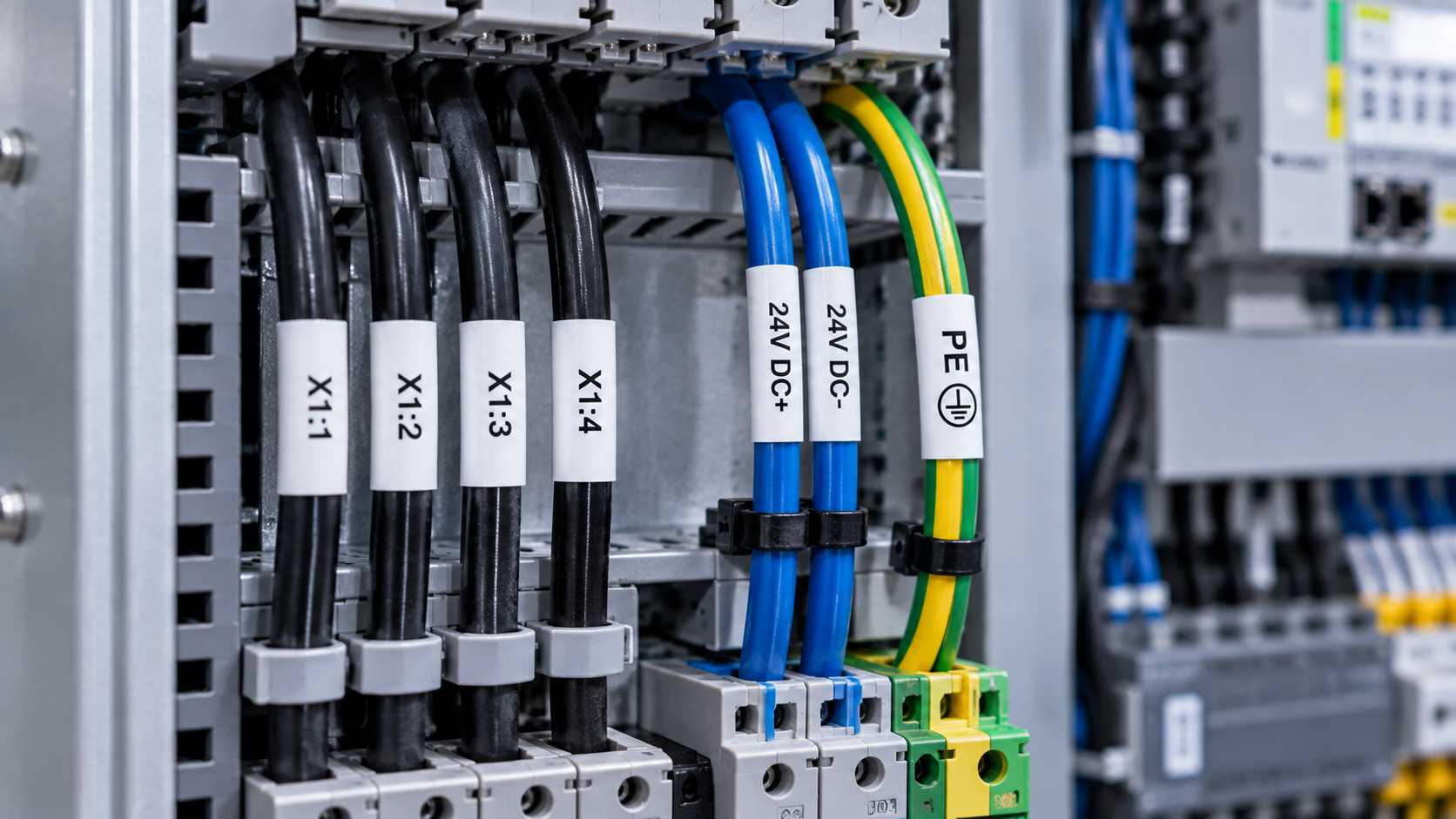
White wire identification markers on black, blue, and green-yellow conductors in an electrical enclosure

02 / Where and how it is used

Identification throughout the wiring workflow.

A cable marker needs to fit the conductor and remain useful after routing and installation. Diameter, insulation and access to the identification area guide the label construction.

Wire Harness Manufacturing

Circuit and branch identifiers used during harness assembly and inspection.

Cable Assemblies

Part numbers and serial information for finished cable assemblies.

Control Cabinets

Connection references for terminal wiring, installation and maintenance.

Industrial Equipment

Wire and harness identification for power cables, automotive / electrical assemblies and industrial electrical systems.
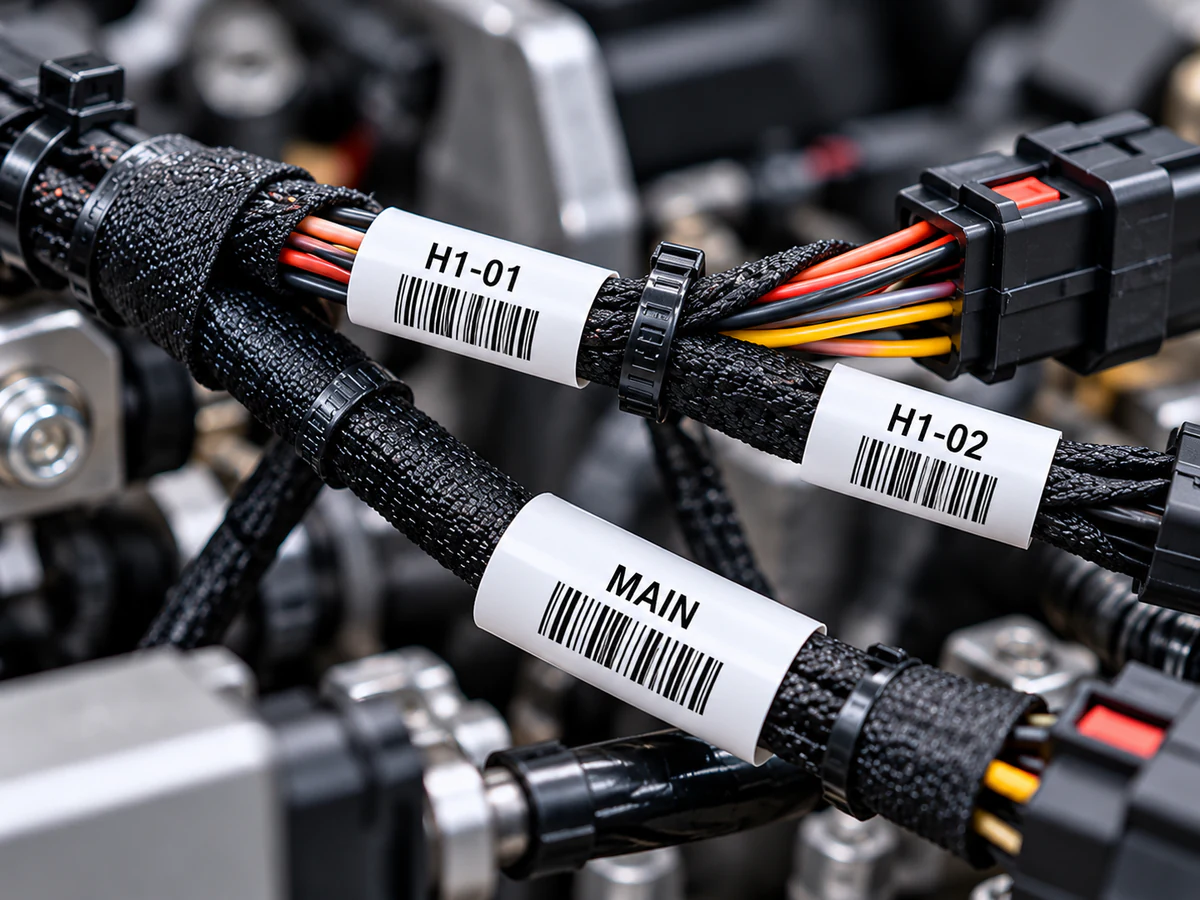
Adhesive identification labels on branches of a wire harness.

03 / Selecting the right construction
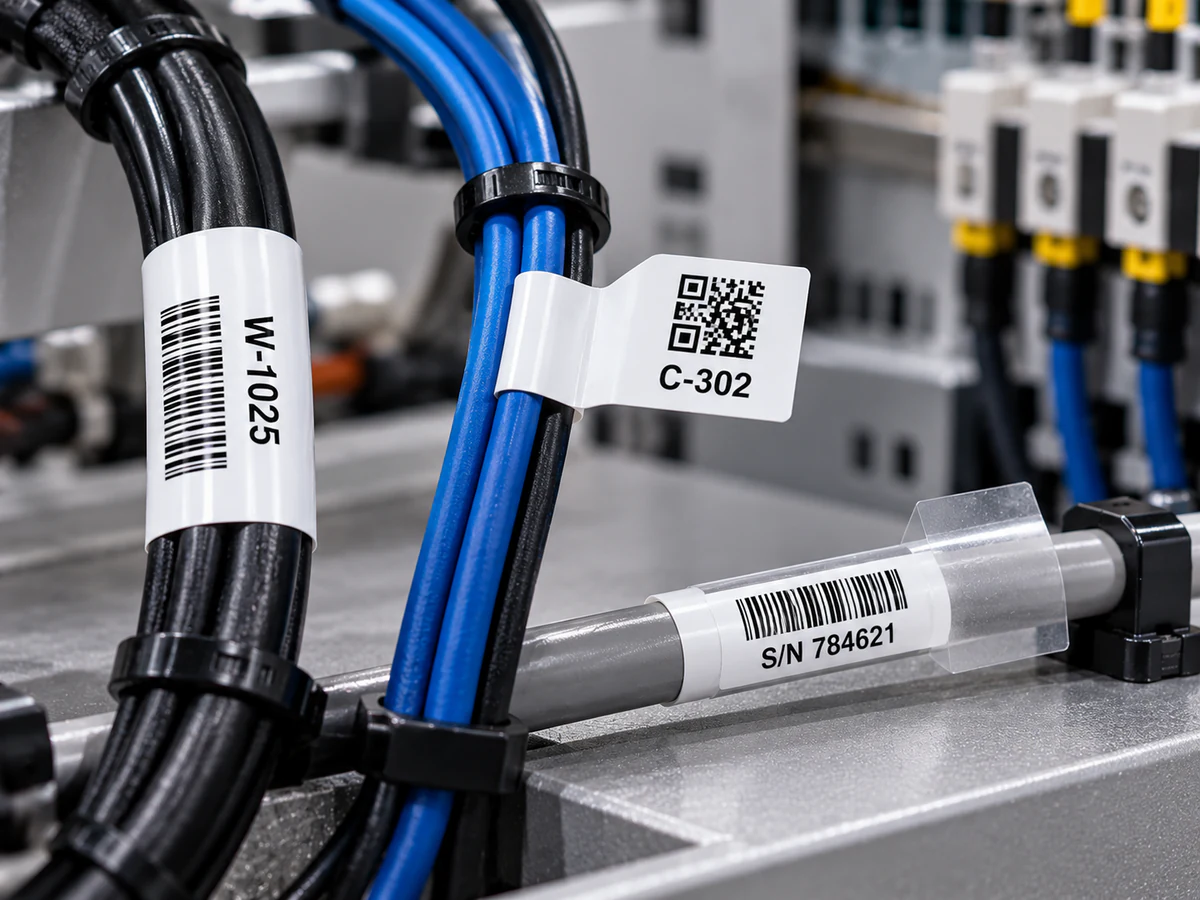
Start with the cable, then choose the format.

Wrap-around and flag identification labels on cable samples.
  1. 01

    Diameter & Geometry

    Supply conductor or bundle diameter, bend radius and the space available for a wrap or flag.

  2. 02

    Insulation Surface

    Identify insulation material, texture and any surface contamination.

  3. 03

    Assembly Sequence

    Consider when the label is applied and how the cable is routed afterward.

  4. 04

    Handling & Exposure

    Describe bending, abrasion, oils, cleaning and environmental conditions.

  5. 05

    Reading Access

    Specify viewing direction, scanner access and the information needed at each end.

  6. 06

    Service Requirement

    Define what must stay attached and readable during installation and use.

04 / Materials, print and format

Technical Options

Wrap-around, flag-style and self-laminating options for finished wire and harness identification. Select the construction around cable diameter, bend radius, insulation and exposure.

Construction
  • Wrap-around labels, flag-style identification and self-laminating constructions
  • Cable / wire markers and custom harness identification
  • Wrap length, overlap and conformability matched to diameter; flag reading area reviewed for movement and snagging risk
Materials
  • PET / polyester, vinyl and nylon
  • Polyimide options for higher-temperature or demanding environments
Temperature
  • Approximately −40°C to +150°C for selected industrial / flame-retardant constructions
  • Higher-temperature PI options where required by the application
Adhesive & resistance
  • Permanent acrylic, high-tack and application-specific adhesive systems for adhesion and resistance to edge lifting
  • Oil, moisture, abrasion and UV resistance options
Identification
  • Wire ID, harness ID, barcode, QR code, Data Matrix and serial numbers
  • Circuit references, terminal numbers and paired identifiers fitted to the available reading area
Compliance options
  • Selected UL94 V-0 / VTM-0 flame-retardant and halogen-free constructions
  • RoHS / REACH options depending on selected construction
Supply format
  • Custom die-cut dimensions; rolls, sheets or individual pieces
  • Clear protective wrap and lamination options

05 / Application and validation

Check readability after the cable is installed.

A label that is easy to read on the bench may face a different task inside the finished assembly. Review the installed position alongside the handling and exposure requirements.

  • Routing and bend locations
  • Access inside cabinets and harness bundles
  • Oils, abrasion and cleaning
  • Temperature and indoor / outdoor use

06 / Discuss your application

Start with the cable your label needs to identify.

Share the diameter, insulation, assembly conditions and printed information. We can evaluate a finished label construction for your wiring application.

A short description, approximate size and quantity are enough to start.

Helpful application details, when available
  • Application / harness type
  • Cable diameter and bend radius
  • Insulation / surface material
  • Label size, format and quantity
  • Minimum / maximum temperature
  • Oil, UV, moisture and abrasion exposure
  • Wire / harness ID and variable data
  • Barcode / QR / Data Matrix requirements
  • Required service life
  • Flame / halogen / compliance requirements
  • Artwork or assembly sample