WIP and inspection status
Track lots and operation status on parts, carriers or fixtures; define when temporary labels are removed and whether residue is acceptable.
01 / Industry application
Identification for machine builds, production fixtures, WIP and finished assemblies, matched to changing process and service conditions.
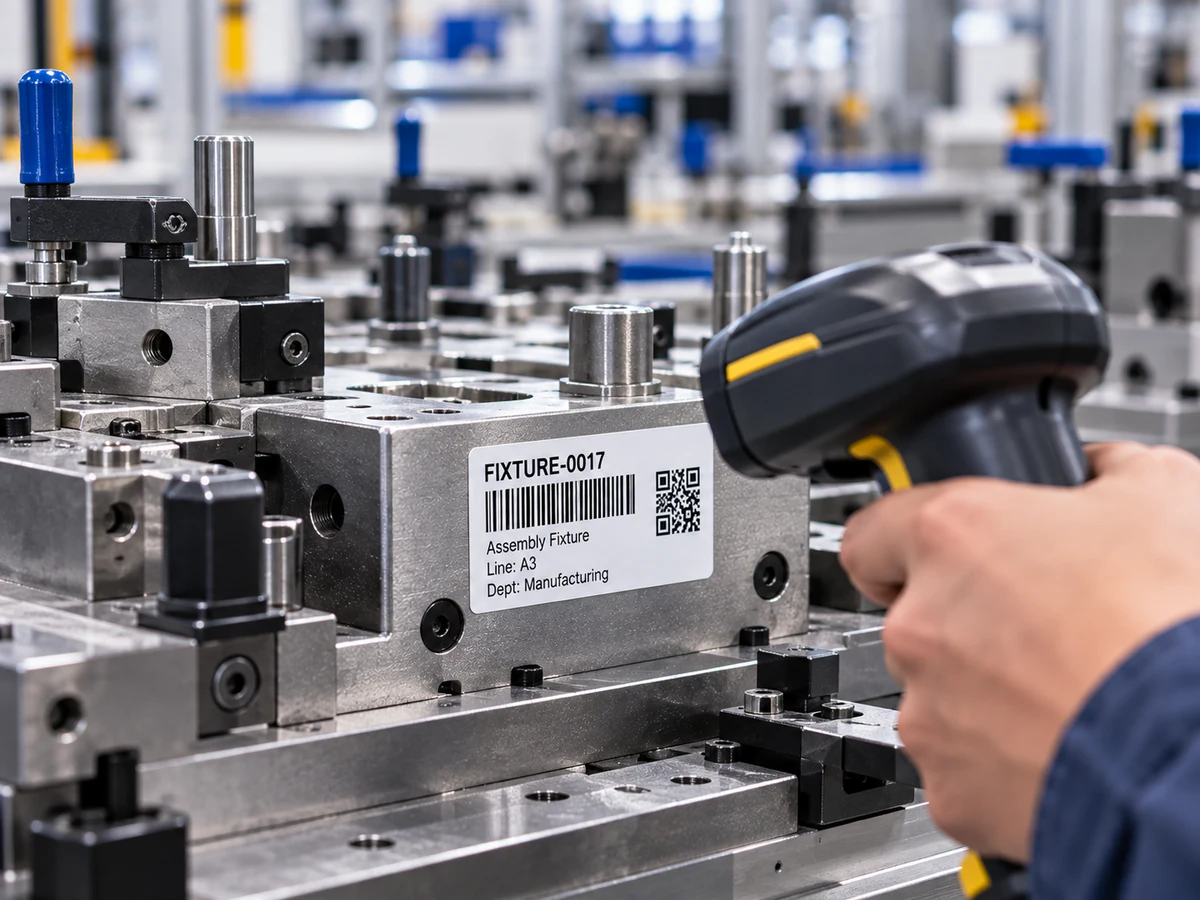
02 / Where labels work
Manufacturing uses both temporary process labels and permanent equipment identifiers. Their removal, durability and data requirements must be separated so that inspection status does not obscure a lasting machine or part identity.
Track lots and operation status on parts, carriers or fixtures; define when temporary labels are removed and whether residue is acceptable.
Identify reusable assets in locations that remain accessible despite oils, coolant contact and handling.
Carry model, serial, warning and maintenance information into the installed environment using a permanent construction.
03 / Process and service
Map machining fluids, oil, cleaning, handling and any heated process steps. The label on a carrier may experience different conditions from the finished component. Outdoor storage also changes the brief.
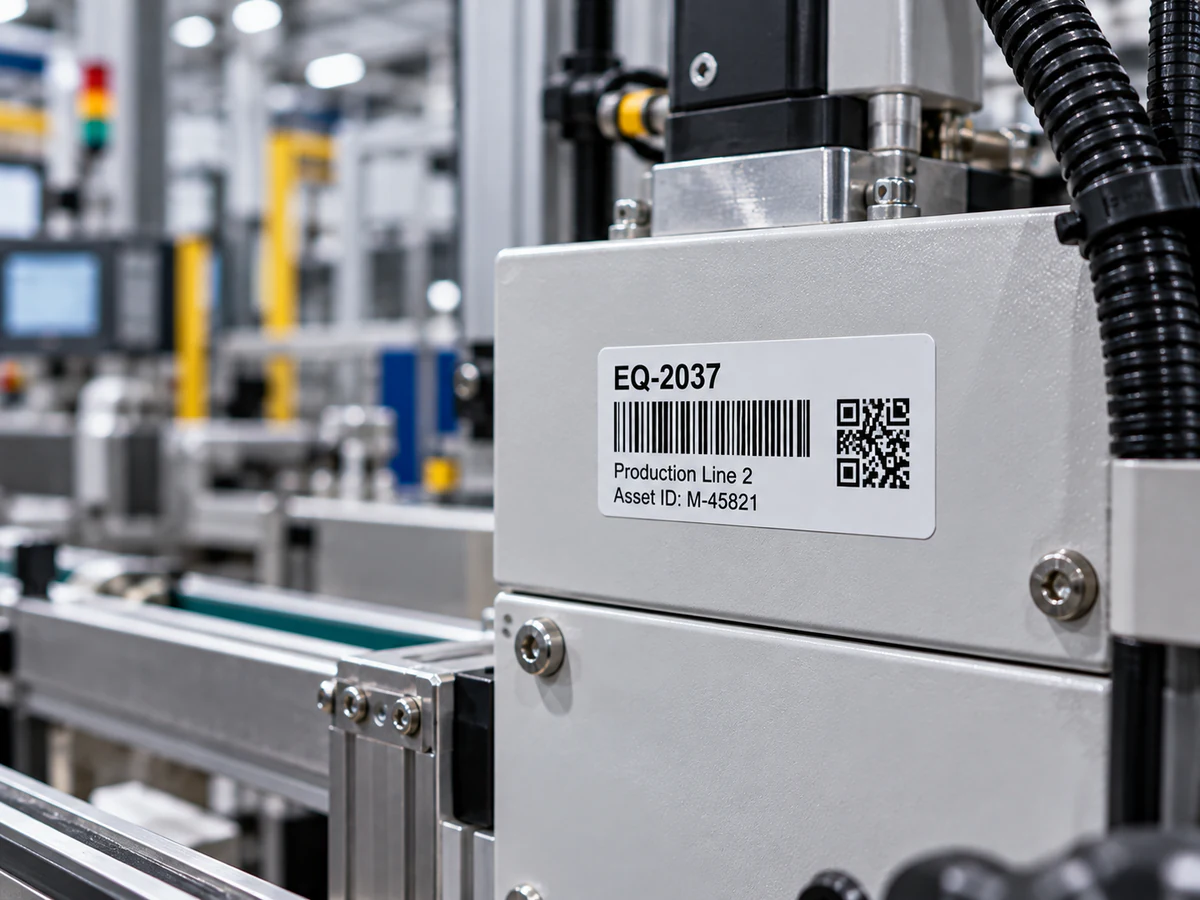
Permanent machine identification serves a different purpose from temporary process labels.
05 / Material, adhesive and identification
Lot, job, serial and asset identifiers can connect WIP, QC, tooling and finished-product records. Define which identifiers persist through rework and which status labels must be replaced.
Machine rating and warning artwork must follow the customer’s approved requirements. Construction-specific UL-related or material declarations may be requested for the end use; no general machinery certification is implied.
Follow a labeled part or fixture through the real process sequence. Check scans at each station, final attachment or clean removal, and the effect of rework and storage.
06 / Start a conversation
Share what you already know. We can work through the remaining details together.