Rating and model panels
Reserve a flat, visible position for model, electrical rating and serial information. Review the final equipment marking content separately from the label construction.
01 / Industry application
Identification for equipment panels, rating information and service assets, matched to coated surfaces, cleaning and operating environments.
02 / Where labels work
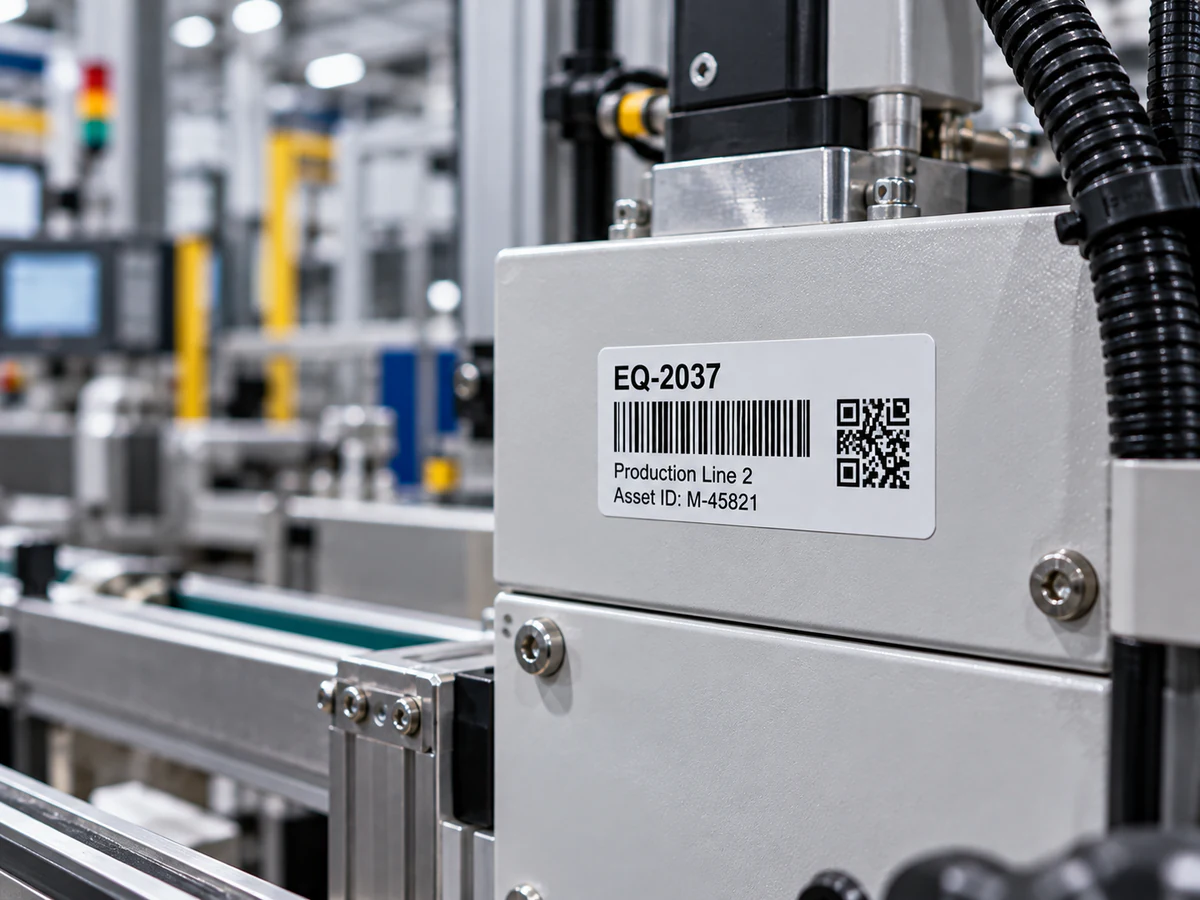
The equipment identifier serves several readers: assembly staff, installers and maintenance teams. Its content and location must remain useful after the machine is installed and exposed to routine cleaning.
Reserve a flat, visible position for model, electrical rating and serial information. Review the final equipment marking content separately from the label construction.
Identify replaceable components and maintenance assets with data that stays associated with the physical module.
Place information where it can be read during the relevant task without requiring removal of guards or covers.
03 / Process and service
Coated metal, textured enclosures and engineering plastics present different bonding surfaces. Check oils, degreasers, wiping abrasion, operating heat and whether the equipment is sheltered or weather-exposed.
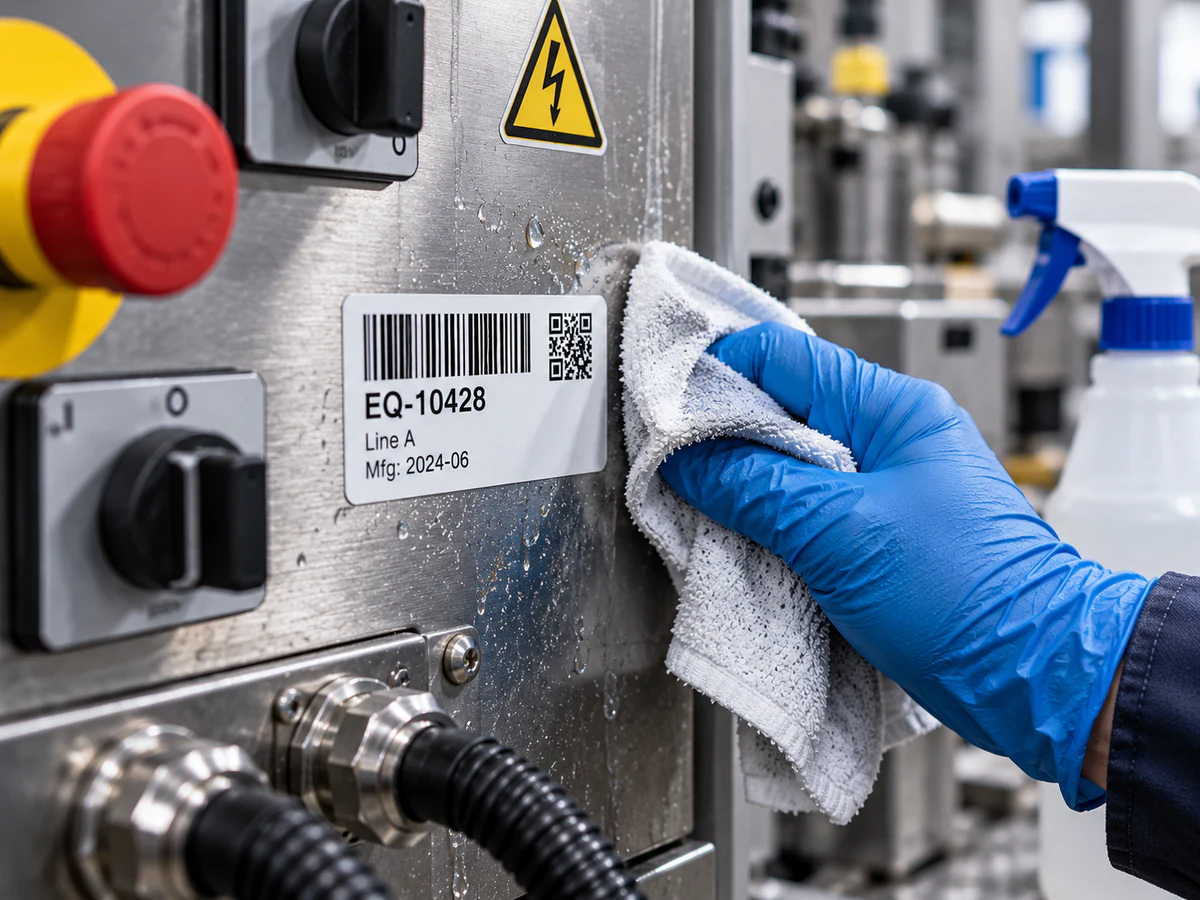
Panel identification must remain readable through routine cleaning.
05 / Material, adhesive and identification
Serial numbers, asset numbers, UID, QR links and model information can connect equipment with installation and service records. Keep essential rating and warning text readable without a scanner.
For specified equipment marking applications, review construction-specific UL 969 / PGDQ2 / PGDQ8, cUL or CSA documentation and its conditions. CE, ETL or GS / TÜV artwork relates to the equipment approval and requires customer authorization; a printed mark does not confer approval.
Apply to production-finish panels and inspect bonding after the agreed dwell. Reproduce the cleaning and abrasion sequence, then check readability and edge condition at the installed viewing position.
06 / Start a conversation
Share what you already know. We can work through the remaining details together.